On Sunday afternoon we had a bunch of our Jr. High students over to the house for a pizza party. We had such a fun time together!
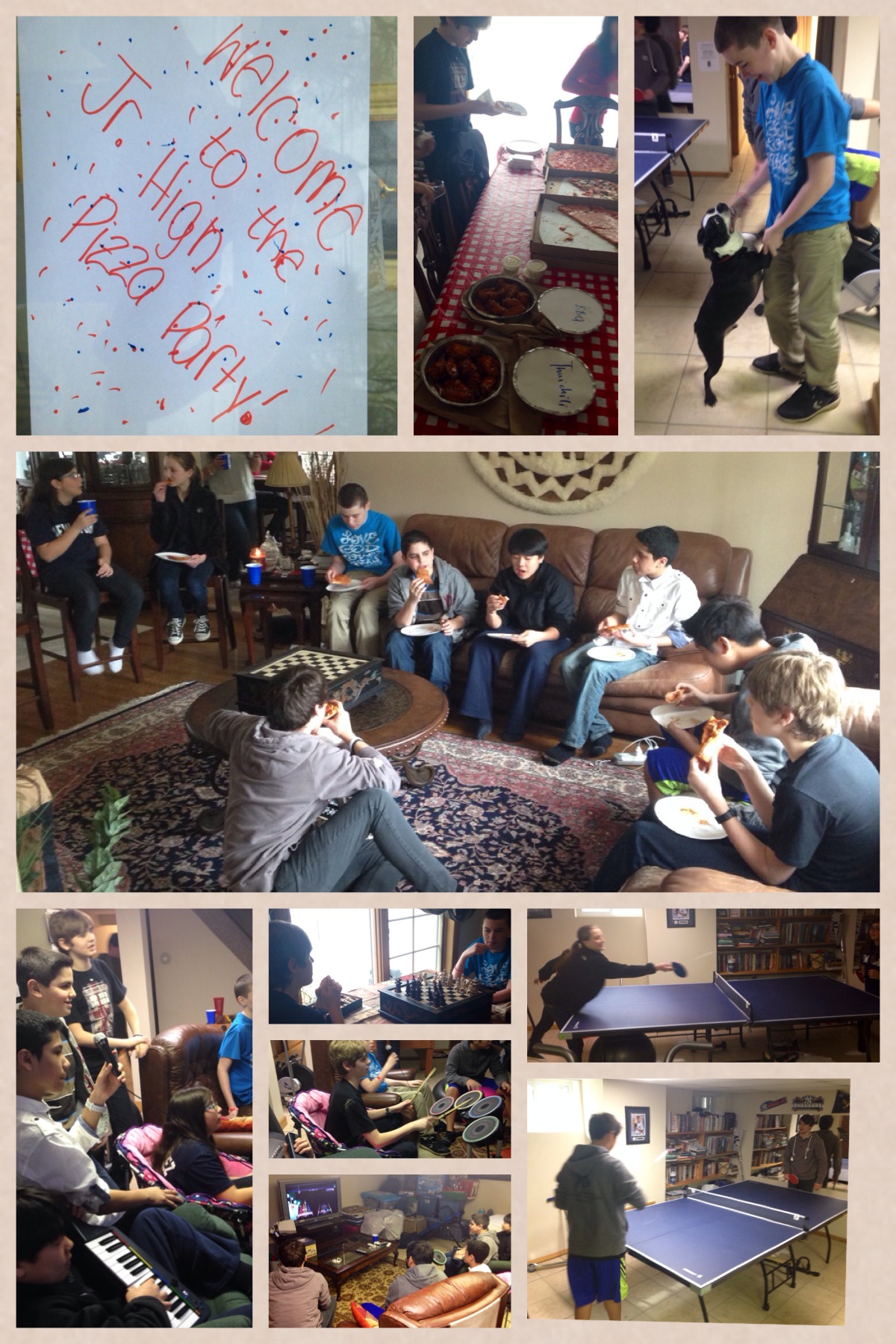
On Sunday afternoon we had a bunch of our Jr. High students over to the house for a pizza party. We had such a fun time together!
Today we were excited to see that our youth ministry made the Manhasset Press! Full-page spread. So proud of our students! Thanks to Steve and Judy Chin-Bock for getting our story out there to inspire people.

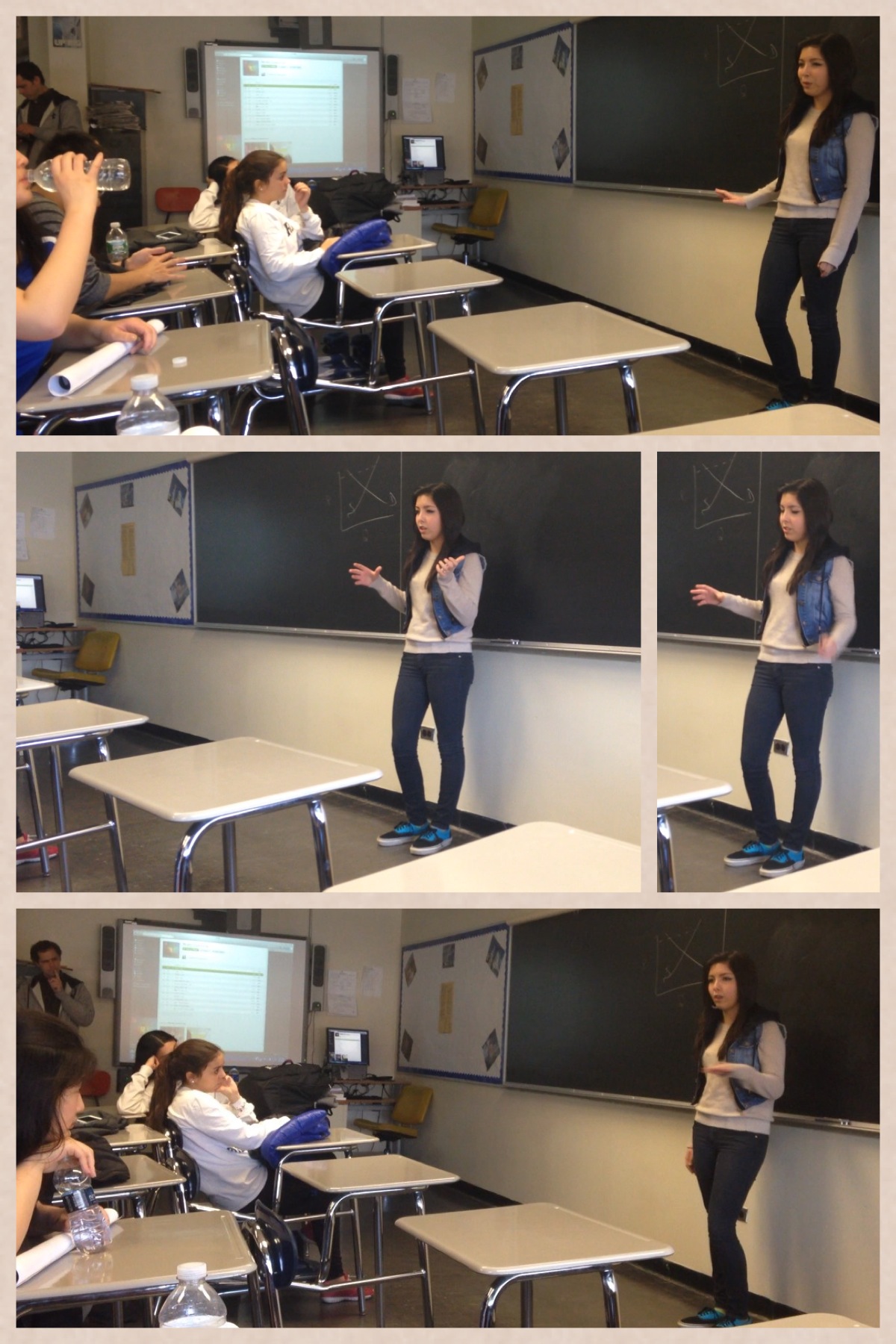
My oldest daughter Claudia is so awesome! Yesterday I had the privilege of listening to her speak at her high school Christian Club. She is a great young speaker, and shared her story so clearly, courageously pointing her peers to Jesus. God is doing good things at Roslyn High School, and we are so proud of her!
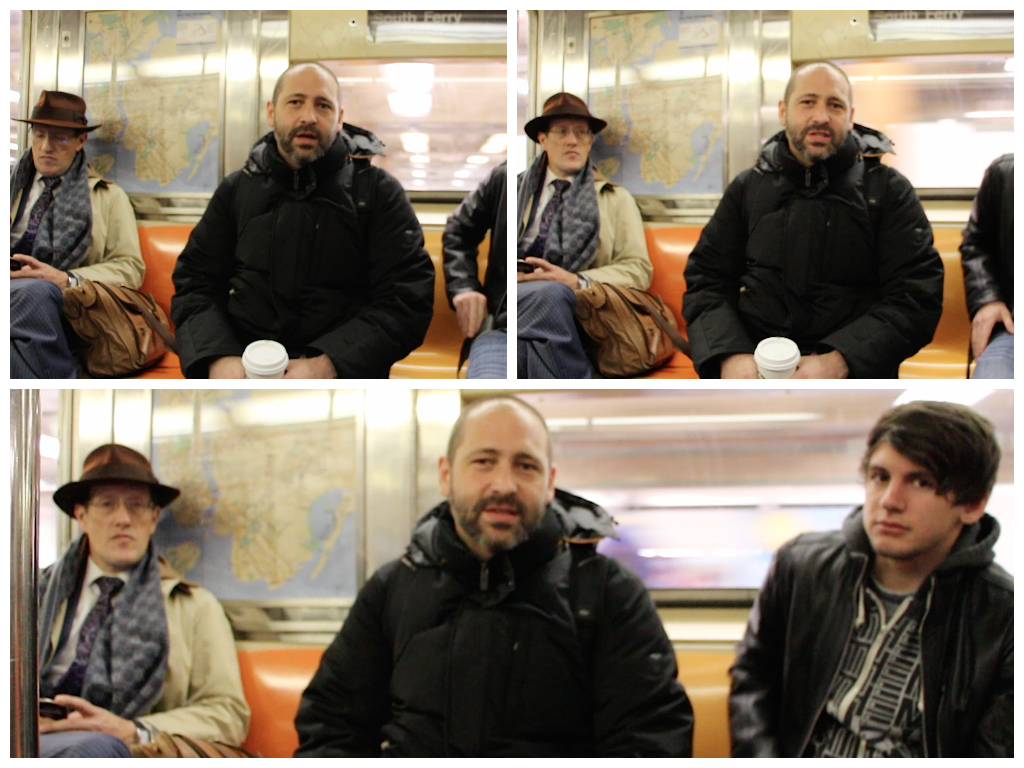
Yesterday I took Mike and Ren with me to shoot a video interview with my friend Reggie Stutzman in the Bronx for my message this coming Sunday at Shelter Rock Church. When we got on the train, Ren was tuning up the video camera, and look who was sitting next to us! It was CNN reporter Richard Quest! He was very nice when we said Hi to him, and last night he Tweeted me, saying he saw us on the train and was curious about what we were going to film. I told him we were going to interview a friend who is doing some awesome community transformation with his church in the Bronx.
Here’s some footage of Gungor rockin’ some solos during their concert at SYMC this past weekend.

If you or someone you know is a parent or will be one someday then join us for a FREE webinar on
Tuesday, March 4th at 8 PM ET / 7 PM CT/ 5 PM PT.
*If you can’t make it, register anyway and we will send you the recording after it’s done
Click here to register.
This webinar will be hosted by Craig Gross, founder of XXXchurch.com. Craig Gross is an author, speaker, pastor, and revolutionary. Craig has been featured in GQ magazine, Newsweek, Time, Wired, the New York Times, the Los Angeles Times, and has appeared on Good Morning America, Nightline, CNN, Fox News, and The Daily Show with Jon Stewart.
Craig, a former youth pastor, has spoken to thousand of parents and teens on the issues of sex and pornography. He’s also authored several books addressing these topics including Questions You Can’t Ask Your Mama About Sex, Eyes of Integrity, and Touchy Subjects.
In this webinar Craig will be talking about:
• When to have the “sex talk”
• Age Guideline – At what ages are certain topics appropriate to discuss
• The importance of listening
• The importance of honesty
• Being on the same page as your spouse
• The reasons to wait for marriage to have sex
• And much more
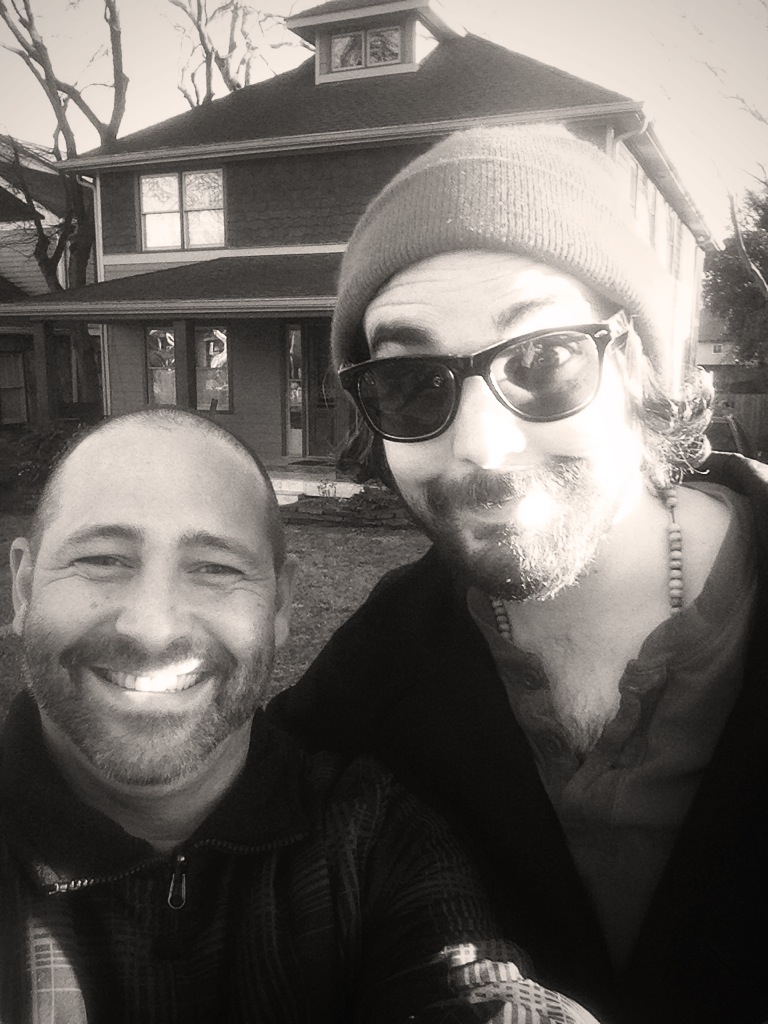
Yesterday I had a great time visiting with my friend Jason Morant. It’s been several years since we have seen one another, and it was great to spend the day reconnecting with him, thanks to a business trip that brought me to Nashville, TN. It was good hearing the story of his journey the past few years, and I am excited about some upcoming music he’s working on. It was also very fun meeting his vivacious 4-year old daughter who pointed out that my beard is not on my neck like her daddy’s, and told me I was her husband, which was followed by lots of laughing and running around. lol!
 “… The practice of reading Scripture, studying Scripture, acting Scripture, singing Scripture — generally soaking oneself in Scripture as an individual and the community — has been seen from the earliest days of Christianity as central to the formation of Christian character.
“It is important to stress at this point … that this has only secondarily to do with the fact that Scripture gives particular instructions on particular topics. That is important, of course, but it is far more important that the sheer activity of reading Scripture, in the conscious desire to be shaped and formed within the purposes of God, is itself an act of faith, hope, and love, an act of humility and patience. It is a way of saying that we need to hear a fresh word, a word of grace, perhaps even a word of judgment as well as healing, warning as well as welcome. To open the Bible is to open a window toward Jerusalem, as Daniel did (6:10). no matter where our exile may have taken us.
“It is, in particular, a way of locating ourselves as actors within an ongoing drama. No matter how many smaller stories there may be within Scripture, and how many million edifying stories there may be outside it, the overall drama of Scripture, as it stands, forms a single plot whose many twists and turns nonetheless converge remarkably on a main theme, which is the reconciliation of heaven and earth as God the Creator deals with all that frustrates his purpose for his world and, through his Son and his Spirit, creates a new people through whom his purpose — filling the world with his glory — is it last to be realized. To be formed by this capital-S story is to be formed as a Christian. To take the thousand, and ten thousand, decisions to open the Bible today and read more of the story, even if we can’t yet join it all up in our own heads, is to take the next small step toward being the sort of person who, by second nature, will think, pray, act, and even feel in the way appropriate for someone charged with taking that narrative forward.
“We are not yet, after all, at the end of the drama. Bible readers … will find themselves drawn in as ‘characters’ on stage. Yes that may well mean ‘playing a part,’ and all the old charges of hypocrisy that cluster around the practices of virtue will come rumbling in here as well. But the more you know the play, the less you will be ‘playing a part’ and the more you will simply be yourself. Sooner or later, you’ll be acting naturally. Second nature. That’s how virtual works.
“Of course, within the Bible there are all kinds of far more specific passages which shape and direct the life of faith, hope, and love, and which the Spirit can and does use to stir up God’s people to produce fruit. Almost every paragraph of the four gospels will have this effect, if read, pondered, and prayed through slowly and carefully. Likewise, the Psalms will open up the heart and mind of anyone who reads, sings, or prays them with any attention; they will form and reform that heart and mind in a way which, though by a no means always comfortable, is always formative of Christian character. Even the genealogies, best read today at a run, can provide a powerful sense of the ongoing purposes of God, with generation after generation living by faith and hope before the next major point in the divine purpose unfold, like a long-awaited late-blooming orchid. Some parts of the Bible are best drunk like a large glass of water on a hot day — in other words large quantities at a time — while others, such as many parts of the letters, are best sipped and savored, drop by drop, like a fine wine (always remembering that, especially in a letter, every verse means what it means in relation to the whole thing, not on it’s own). But the point is that reading the Bible is habit-forming; not just in the sense that the more you do it the more you are likely to want to do it, but also in the sense that the more you do it the more it will form the habits of mind and heart, of soul and body, which will slowly but surely form your character into the likeness of Jesus Christ. And the “your” here is primarily plural, however important the singular as well.
“This isn’t to say there aren’t hard bits in the Bible — both passages that are difficult to understand and passages that we understand only too well but find shocking or disturbing … Avoid the easy solution to these: that these bits weren’t ‘inspired,’ or that the whole Bible is wicked nonsense, or that Jesus simply abolished the bits we disapprove of. Live with tensions. Goodness knows there are plenty of similar tensions in our own lives, our own world. Let the troubling words jangle against one another. Take the opportunity to practice some patience (there may yet be more meaning here than I can see at the moment) and humility (God may well have things to say through this for which I’m not yet ready). In fact, humility is one of the key lessons which comes to reading the Bible over many years; there are some bits we find easy and other bits we find hard, but not everybody agrees as to which is which.
“Some people, it seems, are temperamentally suited to a particular book or type of book which others find opaque. John’s gospel is like that: some acclaim it as the very summit of the Scriptures, while others, though appreciating some of its great strengths, find it awkward and puzzling. Some people find that with St. Paul as well. Perhaps — and this is where humility comes in — it might just be the case that Scripture is so arranged that in order to grow toward a full genuine humanness toward the well-rounded virtue of being a royal priesthood, we have to grow into Scripture, like a young boy inheriting his older brothers clothes and flopping around in them while he gradually fills out and grows up. Perhaps it’s a measure of our own maturity when parts of Scripture that we found odd or even repellent suddenly come up in a new light; when people who naturally embrace Paul come to love John as well, and vice versa; when people soaked in Revelation suddenly warm to Acts, and vice versa. Perhaps it’s another sign of maturity when our sense that Scripture is made up of some bits we know and love and other bits we tolerate while waiting for our favorites to come around once more, is suddenly overtaken by a sense of the whole thing — wide, multicolored, and unspeakably powerful. We had, perhaps, been wandering around in light mist, visiting favorite villages and hamlets, and then, as the mist gradually cleared, we discovered that everything we had loved was enhanced as it was glimpsed within a massive landscape, previously unsuspected, full of hills and valleys and unimagined glory” (N.T. Wright, After You Believe, pp. 261-264).
 This year our family is seeking to read through the entire Bible together along with hundreds of others from our church who have taken the Cover-to-Cover challenge. I’ve read through the Bible many many times before, and each time I come to one of two hurdles. First are those monotonous descriptions of the building of the tabernacle and its furnishings. Second are those long genealogies consisting of names that I can’t pronounce. When I hit those sections, I either find myself reading the same line over and over again as I fade in and out of consciousness, I give up, or I force myself to endure and read on.
Recently our family read about the building of the tabernacle. We read God’s detailed instructions to Moses about what was to be built, how it was to be built, who was supposed to build it, the materials that were to be used, etc. Well, here, listen to some of it for yourself:
Make the tabernacle with ten curtains of finely twisted linen and blue, purple and scarlet yarn, with cherubim worked into them. . . . All the curtains are to be the same size—twenty-eight cubits long and four cubits wide. Join the five curtains together. . . . Fold the sixth curtain double. . . . Make fifty loops along the edge. . . . Then make fifty bronze clasps. . . . Make a covering of rams skin dyed red, and over that a covering of hides of sea cows (Exodus 26:7-15).
The questions began: Why is this in the Bible? Why do we have to read it? What does it have to do with our lives? Isn’t the Word of God supposed to inspire us and change our lives and our thinking? How does this detail help us? We were faced with a test. Were we going to give up on our journey, or were we going to stay the course?
We decided to stay the course. Jeremiah 33:3 says, “Call to me and I will answer you and tell you great and unsearchable things you do not know.” We decided to take God up on His promise and asked him what He might want us to understand as we read about these details of the building of the tabernacle. There are, I am sure, other reasons that these things are included in the Holy Scriptures, but let me share what we discussed.
It’s so obvious that we too often miss it. The very point of these repetitions is to underscore that God is a God of detail. He wanted everything to be just right, even down to the number of loops in the curtains and the color of the fabric.
The word for tabernacle or temple means an abode, a dwelling place or habitation. In the Old Testament it referred to the physical place that the people built for God to dwell in. In the New Testament, Paul reminds us no less than three times that we (Christians) are the temple of the Living God (I Cor. 3:16, 6:19; II Cor. 6:16).
Here are two encouraging thoughts concerning God’s attention to detail.
First, just as He called for the tabernacle to be created with detail, God created you (His Temple) with the greatest attention to detail! Ponder the words of David in Psalm 139:14-15, in which he says, “I praise you because I am fearfully (awesomely) and wonderfully made. . . . My frame was not hidden from you when I was made in the secret place. When I was woven together in the depths of the earth.” God made you exactly the way He wanted you to be! Further, God does not make mistakes! You were created by the God of the universe who is also the God of the smallest detail.
Second, just as the craftsmen had to pay close attention to the detail of their work to meet God’s blueprint, you must pay close attention to the details of your life. Paul told the Ephesians, “Live a life worthy of the calling you have received” (4:1). He said to Timothy, “Watch your life and doctrine closely. Persevere in them, because if you do, you will save both yourself and your hearers” (I Tim. 4:16).
You have been created by God and called to serve Him. He has given you a blueprint (His Word) which is the way you are to live your life. People are watching you—not to see if you are perfect, but to see if you are a person of integrity. Construction workers say a building has integrity if everything is level and lines up. Does your life line up with the Word of God? When you identify areas of your life that don’t line up, do you do whatever is necessary to get realigned?
Remember, we’re not just talking about the big, obvious things. God is interested in the smallest details of your life. I love what Solomon says, “Catch the little foxes that ruin the vineyards” (Song of Songs 2:15). Pay close attention to those things that seem small; those things that are subtle. Things like impure thoughts, pride, false humility, what you watch, what you listen to.
The enemy would like nothing more than to get you to compromise in the seemingly small areas. Have you ever known someone who was once on fire for God and is now totally distant from Him. How did they get there? Most people do not make a huge jump over night, they distance themselves from God one small step at a time. Pay attention to the details of your life!
God’s Word is loaded with truth that is life-changing. Even those things that appear to have no relevance can turn into powerful revelations if we read the Word prayerfully and invite the Holy Spirit to guide us in our study.
 REVKEVJR.COM