Leadership requires courage. It means stepping up when no one else is willing to.
Leadership Nugget: One More Step
The Lord of the Rings contains so many great truths and lessons for our lives. Over the next few days I’ll be posting a few clips with leadership nuggets to ponder. Here’s one …
Leadership demands risk. It means going beyond your comfort zone. Venturing into the unknown.
In what ways are you being confronted with the need to take one more step today? A step beyond where you have ever been? A step into the unknown?
Practicing what we Preach vs. Preaching what we Practice – A Thoughtful Insight
 Francis Schaeffer was away at college when he was experiencing a sense of failure over doing something wrong, then being chastised by other students for not “practicing what he preached.” In a letter to Francis his soon-to-be wife Edith wrote him something insightful:
“Franz dear –
We humans fall so short of our ideals at times that it is discouraging. But we wouldn’t want to preach that side of it – I mean we wouldn’t want to say – ‘Well, once a month it’s a fine thing to break through and do something entirely opposite to what you believe is right’ – just because all of us do do things like that. We don’t want to sanction it – just for the sake of preaching what you practice? We want to really preach the Christian life – and then we want to live it so far as is possible, but because we are human – we can’t be perfect. That’s where forgiveness comes into the picture – forgiveness for our mistakes. I don’t know whether you can read into this what I am trying to say or not. Anyway – I think the fellows are all wrong in picking on one small slip – when there is so much more in your life that is parallel to your ‘preaching.’ In fact, I think it might help your influence for them to know that a Christian is just as human as anyone else – the difference is that he has someone to go to with his mistakes – and difficulties – to get them smoothed out – that that instead of pulling him down … he goes on again – a bit more prayerfully – and a bit stronger for having found his feet and climbed up the hill he slid down. See???” (Francis and Edith Schaeffer, pp. 63-64)
“When Obedience Leads You Into a Storm” Guest Post by James Dodzweit
 This past weekend our Worship Pastor Christopher Dobson mentioned this story before a specific song and it has been churning in me all week. In a meeting today the buzzer went off on the crock pot of my heart and I had some thoughts that I hope are as helpful to you as they are to me.
Setting: This story in the book of Matthew immediately follows the feeding of the 5000. Read below.
“Immediately Jesus made His disciples get into the boat and go before Him to the other side, while He sent the multitudes away. And when He had sent the multitudes away, He went up on the mountain by Himself to pray. Now when evening came, He was alone there. But the boat was now in the middle of the sea, tossed by the waves, for the wind was contrary. Now in the fourth watch of the night Jesus went to them, walking on the sea. And when the disciples saw Him walking on the sea, they were troubled, saying, ‘It is a ghost!’ And they cried out for fear. But immediately Jesus spoke to them, saying, ‘Be of good cheer! It is I; do not be afraid’” (Matthew 14:22-27 NKJV).
So the story is pretty clear and the point that Christopher made on Sunday was that the disciples obeyed Jesus … and by obeying they landed themselves in the middle of a storm.
It could be that you are in the middle of a storm right now and not because there is any big mistake that you have made or sin that you can pinpoint.
Realize this … Jesus knew when he sent the disciples into the boat that he was sending them into a storm. He also sent them without his immediate presence in the boat. They waved goodbye and didn’t think anything until the wind picked up. When the wind and waves reached a certain strength, they began to doubt, fear and question what Jesus had done. “Why isn’t he here?” “Why would he send us into this?” “Has he forgotten about us?” “Are we going to die?” Then Jesus comes to them walking on the water. At first they thought he was a ghost and were all the more afraid. Eventually they reconized him and then Peter asks Jesus to call to him so he can walk on the water too.
2 things stand out in this for me:
#1. Jesus didn’t immediately calm the storm when he approached the boat. The disciples would probably have recognized him a lot easier if there weren’t waves, wind, spray tossing everywhere. If they didn’t have to fear for their lives, it would be much easier to focus on Jesus.
This tells me that Jesus’s priority isn’t our comfort. He is even ok with us not being able to see him clearly. I believe the reason Jesus didn’t immediately calm the storm is ….
#2. He wanted to meet the disciples in the storm. This was the same Jesus that hours earlier they had seen on the shore, waved goodbye to and glanced back at as they drifted into the sea. When they said goodbye, there was no urgency, no fear of death, no questioning or doubting. I can only imagine how much Jesus loved being himself in that storm environment. He always cared. Always loved. Always rescued. But in a storm the disciples could finally see him for all he really is.
All that to say this …
If you are in a storm and Jesus isn’t calming it as fast as you want … it’s probably because there are parts of his nature, care and love that he can’t show you on glassy seas. Only in the storm do you see him for who he loves to be. Let him be that to you today in your storm and maybe just maybe … one day you will thank him for the storm you in right now.
Canadian Wilderness Trip Lesson #6: Necessities
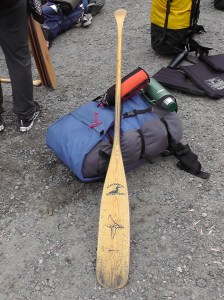 Ever since seeing my dad’s as a kid I had wanted one.
A Stanley 1.1 quart Classic Thermos.
They’re not cheap as thermoses go, so I have often passed them up. But while I was in Walmart shopping for our trip, there it was. Spotlight from heaven shining down upon it. A vision of baby angels in diapers sitting on clouds was seen, and the sound of them singing and playing harps was heard. I knew this was God’s appointed time for me to finally spring for one. And so I did. As I drove home all I could think about was how great it would be drinking Starbucks Via from my thermos in the Canadian wilderness.
I packed my supplies for the trip and was excited about all of my gear, my new Stanley 1.1 quart Classic Thermos chief amongst it all. I took an earth science class in high school, and one of the things I took away from Mr. Moore’s class, when talking about survival in the outdoors, was to prepare for the worst and hope for the best. As I looked through my gear I was sure I had everything I needed.
But then something happened. I picked up my luggage. It was heavy.
No problem. My suitcase had wheels. But my suitcase wasn’t going into the outdoors with me. All of this stuff was going to go into a pack along with my share of team supplies, including food and a tent, all of which was to be carried on my back. And so, I took the painful measure of going through my gear and lightening my load. Some things that I really liked and wanted to take didn’t make the cut because I realized they were not essential.
I went through the process several more times, and each time I made the hard choice to leave things behind. One thing that kept making the cut, however, was my Stanley 1.1 quart Classic Thermos. As we were making final preparations before getting into our canoes and setting out for the week, Greg, one of our experienced team leaders saw me struggling to fit everything into my pack. I had crammed as much in as I could fit. I sat on my pack and squeezed out as much air as I could, but my thermos was not in the pack. Greg asked, “Do you have a cup?” I assured him I did. “If I was you,” he said, “I would leave the thermos. You’re not going to need it.”
What?! O no he didn’t! No way! This thermos was coming with me! I found a couple of carabiners and hooked the thermos onto my pack. Heavy? Yes. Necessary? Do you really have to ask?
By day 3 … I had not used the thermos … not once. I forgot I was going to be up so early each day and would have my 2 cups of coffee in me before 8am. I also apparently neglected to consider that I would be busy paddling all day and wouldn’t have time to sip coffee anyways, even if I wanted to. Plus, one of the carabiners broke and I had to deal with the thermos clunking around while I was struggling to carry my pack along the trails.
Sometimes we need to leave behind things in order to get where we want to go. Sometimes it’s obvious and easy. They may be things that we know are not good for us. They might be sinful things. But then, there are other things that are not as easy to identify and let go of because they are not bad. They are not sinful. But the issue isn’t whether or not they are bad, it’s a question of whether they are essential and helpful in getting us where God wants to take us. The hard thing is letting go of the good things that God tells us we must leave behind in order to reach the great places He wants to take us.
The Apostle Paul put it this way in 1 Corinthians 6:12: “Everything is permissible for me, but not everything is helpful. Everything is permissible for me, but I will not be brought under the control of anything” (HCSB).
The writer of Hebrews said it like this: “Therefore, since we have so great a cloud of witnesses surrounding us, let us also lay aside every encumbrance and the sin which so easily entangles us, and let us run with endurance the race that is set before us, fixing our eyes on Jesus” (Hebrews 12:1-2, HCSB). Notice the two different things: 1) every incumbrance, and 2) the sin which so easily entangles us. Not just the things that will entangle our feet and trip us up (sin), but also the things that will encumber us and weigh us down, making if difficult to move forward.
What are the sin issues that God is calling you to lay aside in order to fulfill His plans for your life? What are other things – maybe even good things – that you know are not helping you in your journey – that God is calling you to let go of?
Wisdom from Robert Frost for the Young and Old
I read this great poem by Richard Frost called “What Fifty Said” yesterday. Both young and old can learn from each other.
When I was young my teachers were the old.
I gave up fire for form till I was cold.
I suffered like a metal being cast.
I went to school to age to learn the past.

Now when I am old my teachers are the young.
What can’t be molded must be cracked and sprung.
I strain at lessons fit to start a suture.
I go to school to youth to learn the future.

Canadian Wilderness Trip Lesson #5: Mystery
I do it all of the time to my daughters. It’s something I incorporate into a lot of our youth ministry events and activities.
Luke 6:31 says, “Do unto others as you would have them do unto you.”
How would I handle having it done to me?
That was the question I was confronted with when Heath and Greg told us: “We will not be telling you where we are going, how far we are going, what we will be doing, or letting you see the map ahead of time. Each day will be a mystery.”
And each day was a mystery. We didn’t know if around the next bend we were going to have to get out and climb over a series of beaver dams, see a 1,400 lb. moose, find a dead end and have to turn around, find a 2,300 meter portage, or if we were going to hear those beautiful words, “that is our campsite for the night.”
I think mystery and adventure are what makes life, well, life. Of course I wish I knew more about God’s future plans for our lives, but I also know that that would negate the need for faith, and God calls us to a journey of faith. And so, many times I withhold information to cause my daughters and students to wrestle with the tension. Sometimes I don’t tell them things because I know that if I tell them ahead of time they’ll never go because it will be a tough challenge and I don’t want them to miss out on the growth they will experience from doing something difficult. Sometimes I don’t tell them because I want them to have the thrill of surprise as they get to do something really fun and amazing. Sometimes I don’t tell them because I don’t want them to get their expectations up only to be disappointed when things don’t go according to plan.
I think creating experiences in which my daughters and students have to live with mystery is really important because they are microcosms of life. In spite of our best planning, sometimes things don’t go according to plan. Sometimes we encounter things that are difficult that we need to wrestle through to strengthen us and give us the experience necessary for something down the road, and if we knew about the challenge ahead of time we would chicken out. And sometimes we encounter things that pleasantly surprise us, blow our socks off, and leave us in awe – things we might not have experienced if we didn’t round the bend because we didn’t know what was there. Mystery is what makes life life, and what makes life worth living.
I love the tag line on one of my new favorite shows “Mountain Men”: “Live for a living.” And if you watch the show, you know that every day is a mysterious adventure.
One of my favorite quotes from The Fellowship of the Rings: “It’s a dangerous business, Frodo, going out your door. You step onto the road, and if you don’t keep your feet, there’s no knowing where you might be swept off to.” – Bilbo.
I was really curious how I would respond to not knowing the specifics of the plan for our trip, but I was pleasantly surprised that I handled it well and simply resigned myself to living fully in each moment and not getting consumed with timelines and directions. It was a real heart-check for me as someone who finds myself, more often than not, in the position of leadership on many of the trips and experiences I participate in.
Embracing mystery is a tough thing for us because we like to feel like we are in control, but that is the essence of surrendering one’s life to the Lordship of Christ. You are essentially saying, “God, You are the Leader of my life. I surrender myself to your will, your plans, for my life. I will embrace my position as a follower, choosing to trust that You know what you are doing and where we are going.”
Some days you will find yourself in canals getting out and carrying your canoe over beaver dams every 100 yards. Some days you will be huffing and puffing and sweating and wanting to quit as you carry your 50 lb. backpack and your 50 lb. canoe on your back. Somedays you will be paddling on a calm glassy lake. Somedays you will be paddling against huge waves. Somedays you will find yourself filled with wonder as you are sitting staring at a 1,400 lb. moose just a few meters from you. Not every day will be easy. Not every day will be exciting. Not every day will be hard. But every day will be a mystery. Every day will be an adventure. Embrace each one as a gift from God.
Proverbs 19:22 – “Many are the plans in a person’s heart, but it is the Lord’s purpose that prevails.”
James 4:13-15 – “Now listen, you who say, ‘Today or tomorrow we will go to this or that city, spend a year there, carry on business and make money.’ Why, you do not even know what will happen tomorrow. What is your life? You are a mist that appears for a little while and then vanishes. 15 Instead, you ought to say, ‘If it is the Lord’s will, we will live and do this or that.’”
Canadian Wilderness Trip Lesson #4: Endurance
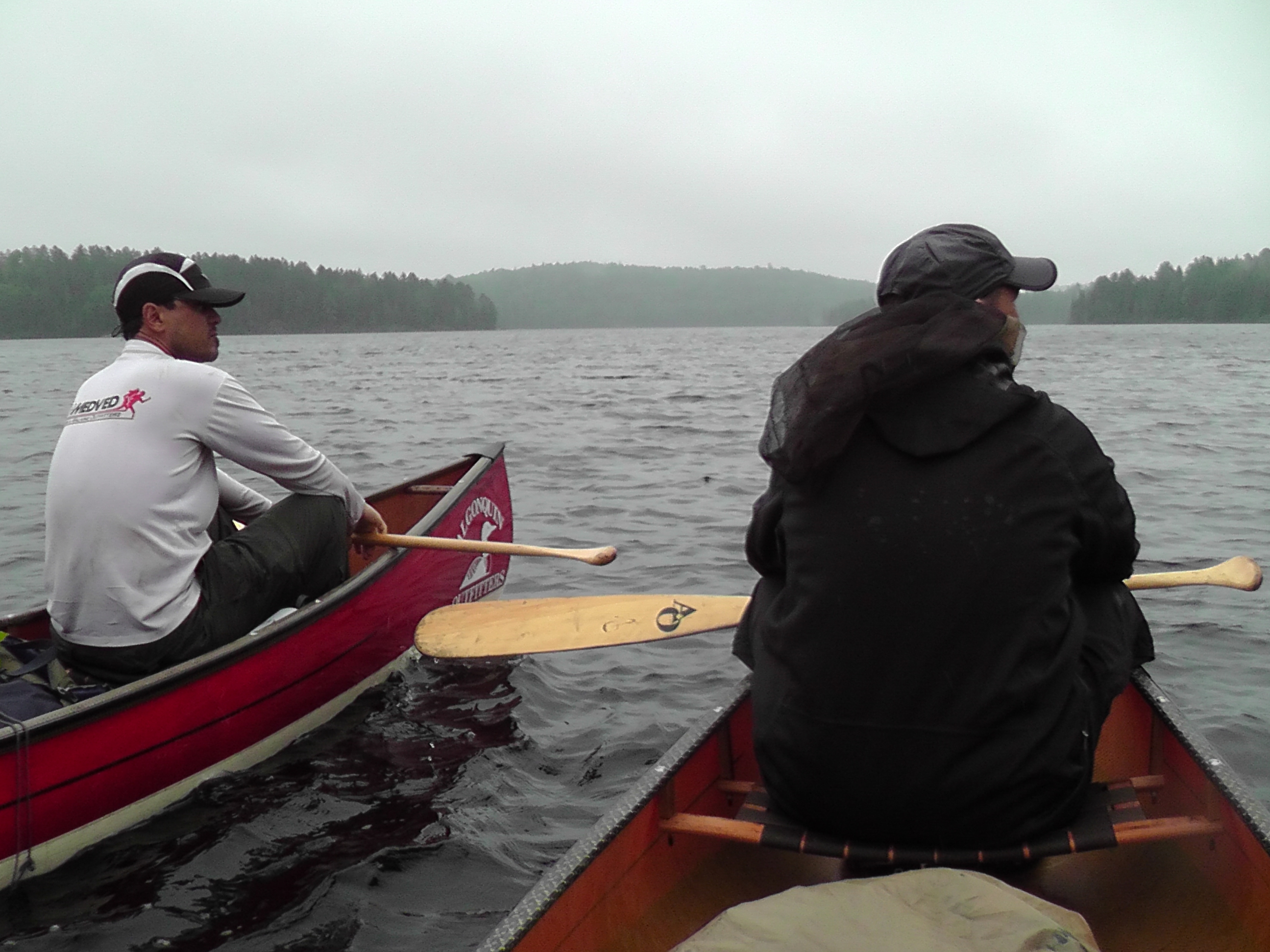
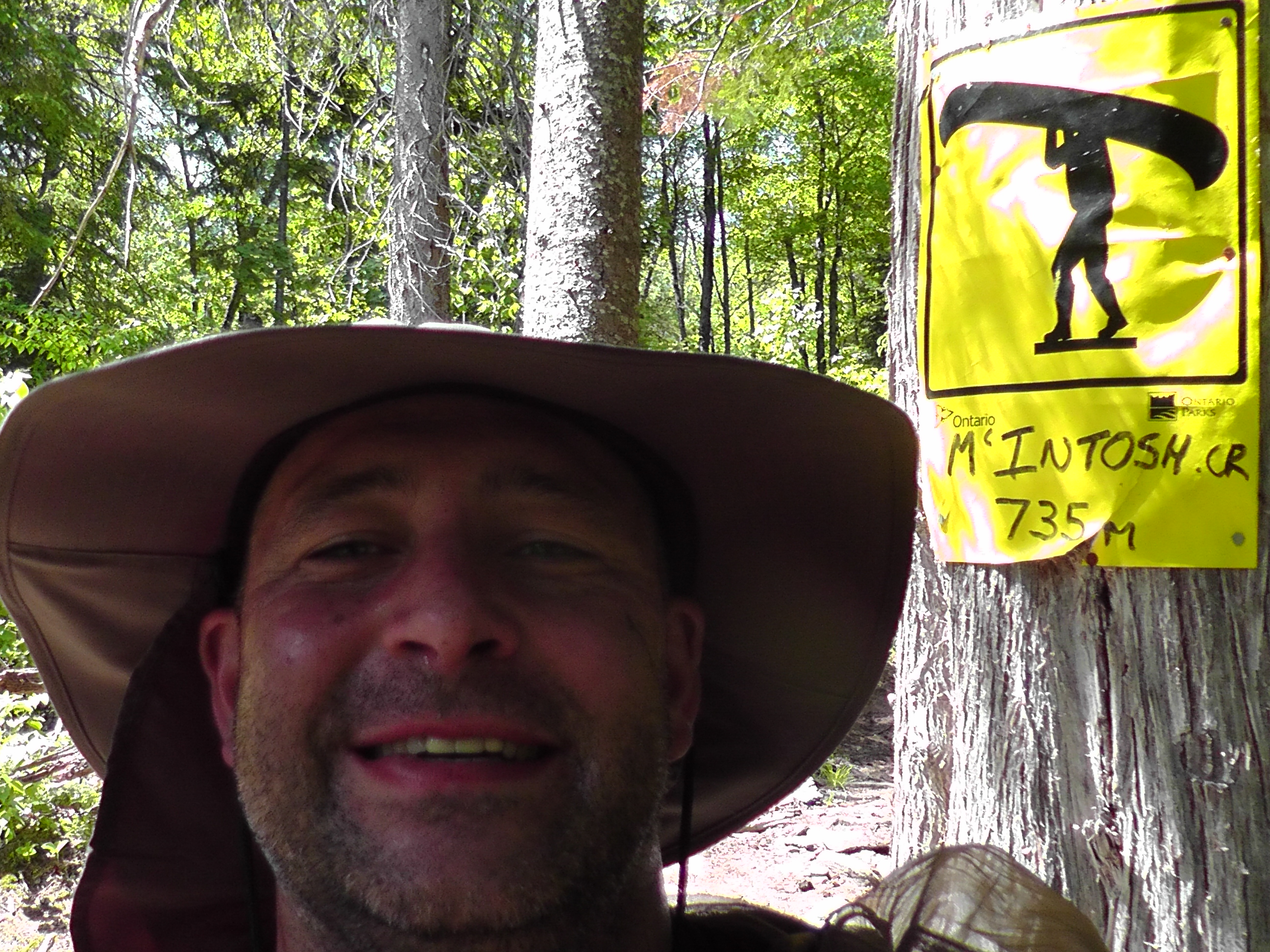
“The plan is to put in the water on Sunday and get out on Friday.” With those words I realized we were not just going on a camping trip. This trip was going to be work. I thought we were just going be going to be sitting around the camp fire and doing some hiking. It wasn’t until I had my airline ticket that I received trip details from Heath. It was then that I found out that in fact we were going to be canoeing 50 miles. My arms got sore and my back went into spasms just thinking about it. He also added a word that I don’t think I had ever heard before: Portaging.
“We’ll also be portaging 5 miles,” he said. Pretending I knew what he was talking about, I quickly Googled it while still on the phone with him. Definition? “The act of carrying.”
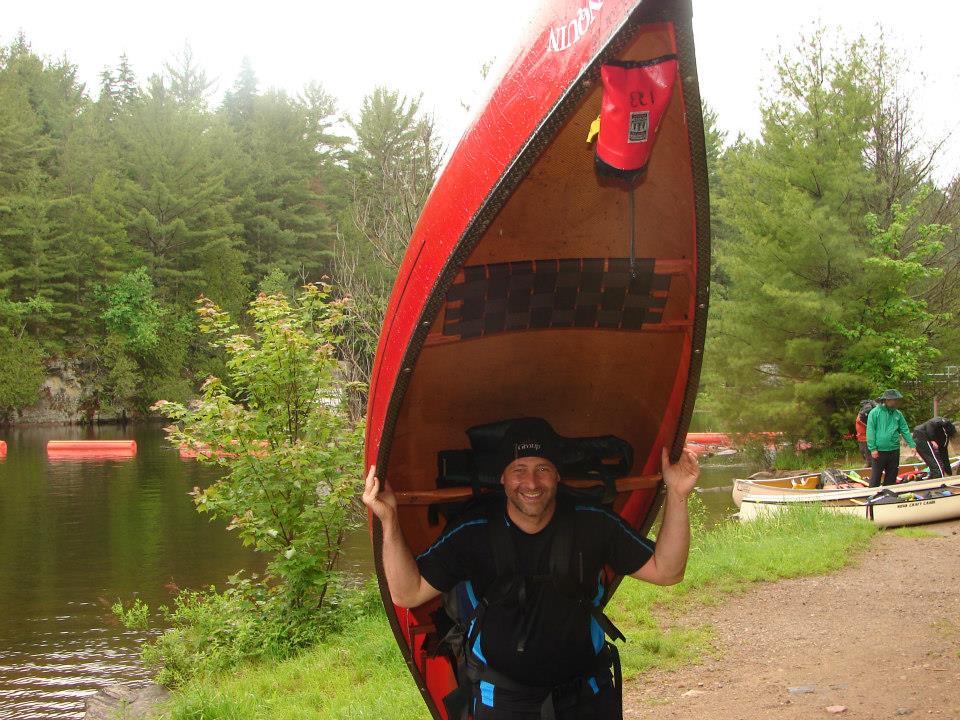
“Each day we have challenges,” he said. “Different length portages varying from 100 meters to 2,300 meters (almost 2 miles). We ask for volunteers to portage, carrying the [50 lb.] canoe (along with their 50 lb. pack), while their canoe partners carry the paddles and encourage them.”
I volunteered for my share of the portages during the trip, and all I can say is this:
Carrying 100 lbs. on your back is tough!
Carrying 100 lbs. on your back on uneven ground with wet, slippery shoes is tougher.
Carrying 100 lbs. on uneven ground with wet, slippery shoes, virtually all uphill for 1/2 a mile is really, really tough.
Carrying 100 lbs. on uneven ground with wet, slippery shoes, virtually all uphill for 1/2 a mile with a bad back is downright grueling. (No, seriously, I do have back issues. I even had surgery a few years ago.)
Of course, I didn’t know it was almost all uphill when I volunteered for that particular portage, which turned out to be the toughest of the trip – even tougher than the almost-2-mile one because of the incline (according to Jonathan who did both of them).
O, and one more thing. The deal with the portage challenges was this: You pick the canoe up out of the water, and you don’t set it down again until it’s in the water at the other end. In other words, no stopping to rest or stretch or get a drink or cry or ….
It took everything in me and more to not stop, to not dump the canoe, to not quit. I was sweating. I was breathing heavily. I was in pain. I thought I was going to die. But I was not going to quit. I was absolutely determined to finish the challenge. And I did. There was no greater sight than coming around the final bend and seeing the water, and there was no greater feeling than getting that canoe off of my shoulders and into the water.
Endurance, more than anything else, has kept me in youth ministry so long. It is fundamental to a successful marriage, parenting kids, working with people, physical exercise, … life! Knowing that there is water at the end of the trail – having a vision – is what gives us the strength and determination and hope we need to keep going when everything in us wants to quit.
I spent some time meditating on the words of the Apostle Paul to Timothy in 2 Timothy chapter 2, and also his assessment of his own life as it was nearing its conclusion: “As for me, my life has already been poured out as an offering to God. The time of my death is near. I have fought the good fight, I have finished the race, and I have remained faithful” (2 Timothy 4:6-7). That has become my prayer. Paul didn’t say he won all of the battles. He said he fought the good fight. He didn’t say he won the race. He said he finished the race.
God, keep your vision ever fresh in my mind and give me the endurance to keep on keepin’ on for you. Amen.
Canadian Wilderness Trip Lesson #3: Rest
My terrible sleeping habits started in college. and only got worse from there. I worked second shift in a factory and didn’t get off until 11pm. I worked close at McDonald’s and would get home at 4am. Of course, when one gets off of work, it’s not simply go home and go to bed. It’s go home and unwind for a while before going to bed. I went back to work second sift at the factory again. Then we had our first child, so when I would get home and take my turns up in the night (my wife might argue me on this one). Then I went to graduate school … while working full time … so … more late nights. Of course, being a youth pastor, many of our events and activities are in the evenings, so … I have been a night owl for a good 20 years now. But, honestly, I feel the drain. I know I don’t get enough sleep. The third lesson I was reminded of on this trip was the importance of rest.
While going on a canoe and camping trip isn’t necessarily a recipe for comfort and sleep (paddling all day definitely makes one tired, but sleeping in a tiny tent on nothing more than a 1/4″ pad while trying not to bump one’s big ole 6′ 4″ tent mate doesn’t lead to the best night’s sleep), it did prove to be restful in a much deeper sense of the word. Indeed, I did find myself going to bed earlier and waking earlier, but the rest I received was more holistic. I experienced the shalom – the peace – of God. The trip provided me with a week of stress relief, quiet from the noises of daily life and responsibilities, and most of all, a time to rest emotionally and re-center myself in God.
Psalm 62:1, 5 – “Truly my soul finds rest in God; my salvation comes from him … Yes, my soul, find rest in God; my hope comes from him.”
As I found rest in the Lord, He assured me of His intense love for me as His child, and in light of that love He helped me reflect on areas of my life that were out of alignment with His best and need of my attention, including my sleep patterns.
I know that my physical condition affects my mental, emotional, relational, and spiritual conditions (See post: The Life of the Body). So, ever since I have returned home, I have been more intentional about getting to bed earlier, and I have definitely felt the affects in my body. I have felt less tired, less stressed and that has allowed me to be more alive and present during the day. 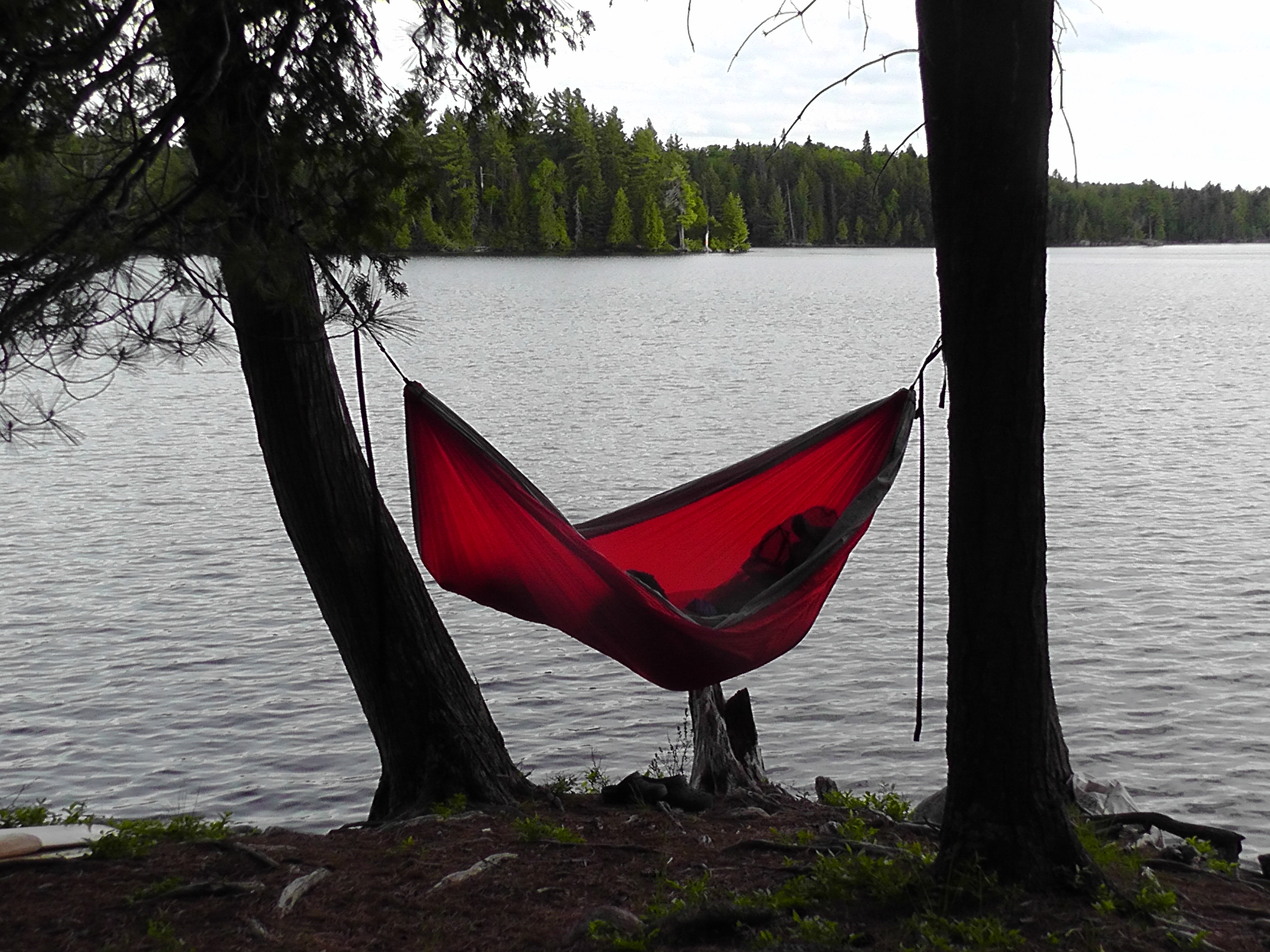
 REVKEVJR.COM