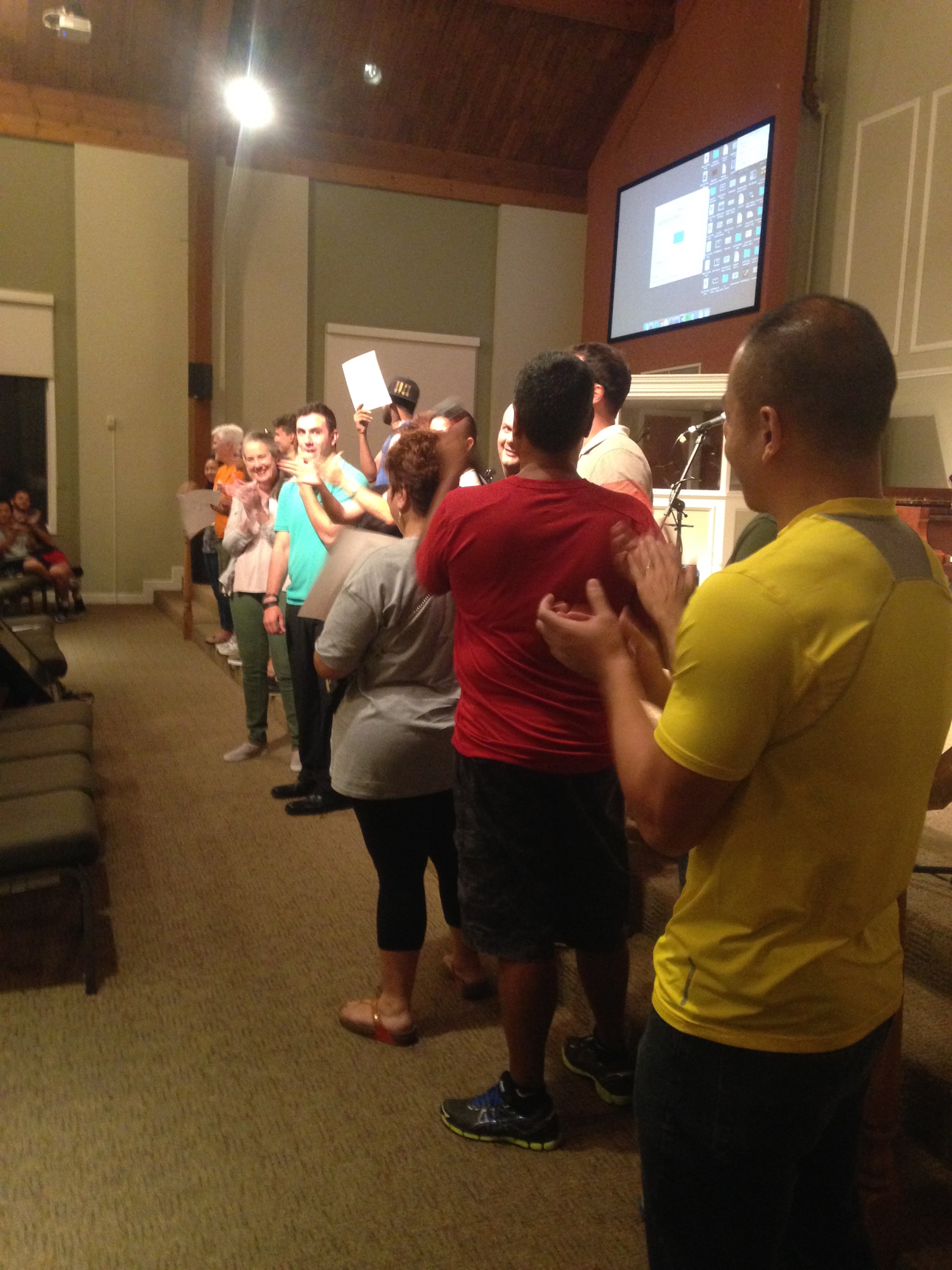
From 4/6/16: Kerri Ann is a resident at West Haven home for the developmentally disabled in Jamaica. She just exides Jesus! Mission Discovery knows her well from their years of visits. She told us she wanted a Bible, and yesterday Hannah told her she would give her her Bible! Today she delivered it and you should have seen the smile on her face. She has also been asking to be baptized for quite some time. Unfortunately her church would not baptize her because of their insistence that it must be by immersion, which is impossible for this young lady. Jen and Scott approached the director and asked if we might be able to baptize her today, and he agreed! We asked her if she wanted to be baptized today, and she lit up. When we gave her the news that she could, she had no words and simply covered her mouth and cried tears of joy. Nathan from MD drove up, and we all gathered under the shade of a tree where she professed her love for Jesus, and Jen, Nathan, and I had the tremendous joy of pouring a bottle of water over her head to baptize her. It was one of the most sacred thigs I have ever witnessed or been a part of!
How to Prepare and Share a Devotional
 As a Christian in community, there are likely to be times when you are asked to share a devotional — maybe in a small group, on a missions trip, at camp, on a retreat, etc. This can feel intimidating if you think, “Woe! I am no pastor. I could never see things in the Bible that they see, let alone share them with other people.” This thinking contains several false beliefs.
- “I have to be a pastor.” The whole Reformation of the 1500s was to refute the thinking that only professional pastors can understand the Bible and teach people what it says. While some people have the gift of teaching and can communicate the truths of the Bible in a more effective way than others, the Bible teaches the priesthood of all believers (1 Peter 2:5), and that God can speak to our hearts directly, because the Holy Spirit who helps us understand God’s Word lives within each of us (John 14:26; 1 John 2:27).
- “I have to be really smart.” Another false belief is that understanding the Bible is simply an academic exercise. The truth is that the Bible is the living Word of God (Hebrews 4:12), and understanding and applying it to our lives is a matter of the Spirit of God enabling us to do so (1 Corinthians 2:14-15).
- “I have to be a good public speaker.” Some people are naturally wired and gifted to be communicators in front of people. Others are not. The good news is that sharing God’s Word in a devotional setting isn’t about eloquence. It’s simply about telling people what God is showing you in the Bible.
When we are living in community, it is important to share with others what we are learning. Paul told Timothy, “The things which you have heard from me in the presence of many witnesses, entrust to reliable people who will also be qualified to teach others” (2 Timothy 2:2). He wrote to the Colossians, “Let the message of Christ dwell among you richly as you teach and admonish one another with all wisdom through psalms, hymns, and songs from the Spirit, singing to God with gratitude in your hearts” (3:16). And he said to the Corinthians, “What then shall we say, brothers and sisters? When you come together, each of you has a hymn, or a word of instruction, a revelation, a tongue or an interpretation. Everything must be done so that the church may be built up” (14:26).
So, here are some simple steps to take in preparing a devotional. Writing is important in this process. For me, I underline key words or verses in my Bible. I jot down notes, questions, thoughts, ideas, etc. as I am preparing. In the preparation process below, you will find all kinds of questions and thoughts to consider, which you should scribble down responses to.
Preparing a Devotional:
- Pray – Sometimes you will have a passage of Scripture assigned to you. Other times you will be given the freedom to find a passage to share. Whatever the case may be, prayer is the essential first step in prep. Thank God for the opportunity He has given you to share from His Word. Invite the Holy Spirit to lead and guide you as you prepare, and help you understand what He wants you to learn. Pray for the people you will be sharing with — that their hearts and minds will be open to receive God’s Word.
- Study – 2 Timothy 2:15 says, “Do your best to present yourself to God as one approved, a worker who does not need to be ashamed and who correctly handles the word of truth.” Once you have a passage of Scripture, ask questions about what is going on in the passage. Ask questions like, Who is writing? Who are they writing to? What was going on? Why are they concerned about this? Why do they feel this is important to share? What did these words mean to the people who read them first? During this step you are not focussed on what this means for you, you are trying to understand the context. Context is the most important thing in Bible study, because if you don’t understand the original intent of the author to the people he was actually writing to, you will misunderstand what it might mean for your life. Another good idea at this step is to look at different translations. Sometimes the way different translators interpret various words will help you get a better sense of the message.
- Interpret – Once you have a handle on the context, now you can ask some interpretive questions. The two main questions you want to answer here are:
- What does this passage tell us about God? Complete the sentence: God is …
- What does this passage tell us about human beings? Complete the sentence: Human beings are …
- Check Other Sources – At this point (not before!), it is good to see if your understanding is on track. Visit biblestudytools.com/commentaries or biblehub.com/commentaries for Free online commentaries. These are insights into the passages from scholars. You want to see if your understandings are consistent with others (there will be variations, which is fins; you just want to make sure you are not way off.) Another thing you can do here is share with a pastor or spiritual leader what you learning and ask for their feedback and insights as people who do study the Bible with regularity.
- One Point – What is the emphasis of the passage? You may have learned several things that are rich, but if you only have 5 minutes to tell people something you learned, what would you choose? What is the one point you want to drive home? In a devotional, your goal is not to preach a full sermon, but to give people one nugget of truth to walk away with and think about that day. What’s the BIG idea? Make it memorable. How can you say the big idea in a catchy way? Rather than saying, for example, “Jesus loved us and died on the cross for us. Because of this, we should love other people,” you could say, “Loved people love people.” It’s simple, catchy, and memorable.” Someone once said, “make it something that could go on a t-shirt.”
- Personal Story or Illustration – What is something you have been through, or a current event that illustrates your main point?
- Application – What do you want people to do to live out the main point? Give them a question or some suggestions about what they can do to live out the truth you have shared.
Sharing a Devotional:
Now your study and brainstorming is done. It’s time to bring it all together in a way that you can share with others. I would suggest that you write it out like you are speaking to people. Then, when it comes time to share, you have the option to simply read what you have written (with practice you can do this without simply staring at the paper), or you can share from an outline you have created from what you have written, which is basically bullet points to remind you what you want to share. Note: Generally speaking, one single-spaced, typed page takes about three and an half to five minutes to read out loud, so you should have about a page and a half or so for a 5 minute devotional (Hand written would be different based on your handwriting.)
A Few Tips and Reminders:
- Know Your Audience. What are their ages? What are their interests? What similarities do you have that you can connect with them over?
- Use a Bible translation that reads well and says things in a way that your audience can understand.
- Be yourself. While you may be shy and speaking in front of people may not be your thing, but that doesn’t mean you have to pretend to be a loud, funny speaker. Just share like you are having a conversation with a friend at Starbucks. If you are funny, use some good, appropriate humor. If you are a good story-teller, bring us into your story. Whatever the case, be yourself.
When is comes to actually sharing your devotional, a good format to follow is Hook, Book, Look, Took (Creative Bible Teaching by Lawrence O. Richards & Gary J. Bredfeldt).
- Hook – A brief introduction to grab the audience’s attention. Ways you can hook people is through humor, sharing a story, or asking a question to get people thinking.
- Book – Share the Bible passage, briefly tell us what’s going on.
- Look – Help the audience understand the big idea. Tell a story, give an illustration, help people see how the passage applies to their lives.
- Took – How can people practically apply what you have just shared with them? What do you want people to take away? What do you want them to believe? What do you want them to think about? What do you want them to do?
The Problem with Being a GPS Christian
 “I used to have a good sense of direction. I could find my way around places. If I got lost, I could figure out how to get back on the right road. But now, without a GPS, I can’t find my way out of a paper bag.” These were the words of my friend as we were driving in another state recently. We were mindlessly following the directions of the GPS, and it was doing things like leading us off of main roads into neighborhoods only to put us right back on the main road again, going in the same direction we had been traveling; sending us down dead-end streets; and telling us we had arrived at our destination only to find ourselves staring at an empty field where it insisted we would find a restaurant. Perhaps you have had similar experiences with your GPS.
GPSs are great tools. They can help us get to our destination, give us real-time traffic alerts, help us find our way when we are lost, and they come with an option to speak to us in a British accent, which makes us feel classy. But what if your phone battery dies while you are driving? What if it can’t get service? What if the GPS’s latest update does not show that a road is closed? The danger of relying on technology so heavily is that you may never learn, or may forget, the skills needed to find your way around.
As I was thinking about what my friend said, I thought about how sometimes we can become so dependent on other people, or programs, or events to connect us to God that we never learn how to connect, or forget how to connect, with God ourselves. While it is great to have other people that can help you grow in God, like your parents, pastors, small group leaders, and friends; what would your walk with God look like if those people were not around? The writer of Hebrews said, “We have much to say about this, but it is hard to explain because you are slow to learn. In fact, though by this time you ought to be teachers, you need someone to teach you the elementary truths of God’s Word all over again. You need milk, not solid food! Anyone who lives on milk, being still an infant, is not acquainted with the teaching about righteousness. But solid food is for the mature, who by constant use have trained themselves to distinguish good from evil” (5:12-14).
Babies are are dependent on others for everything. Adults are responsible for taking care of themselves. When you are a new Christian, you need someone to give you the milk of God’s Word. But eventually you need to grow up and feed yourself the meat of the Bible. God has given you His Holy Spirit (YOU! Not just your parents, not just your pastors, not just your small group leaders … YOU!) to teach you what God’s Word means and to give you the strength to live according to what He shows you.
Just like there is nothing wrong with a GPS, there is nothing wrong with having people in your life to help you grow. In fact, they are necessary! BUT, those people aren’t meant to just give you all of the answers, their job is to help you learn how to think biblically and how to listen to the Holy Spirit within YOU! Their job isn’t to study the Bible and hear from God for you, their job is to help you hear from God yourself. Ask yourself:
In what ways am I being too dependent on others for my spiritual growth?
How does God want me to start feeding myself spiritually? What are some steps I need to take?
Small Group Kits
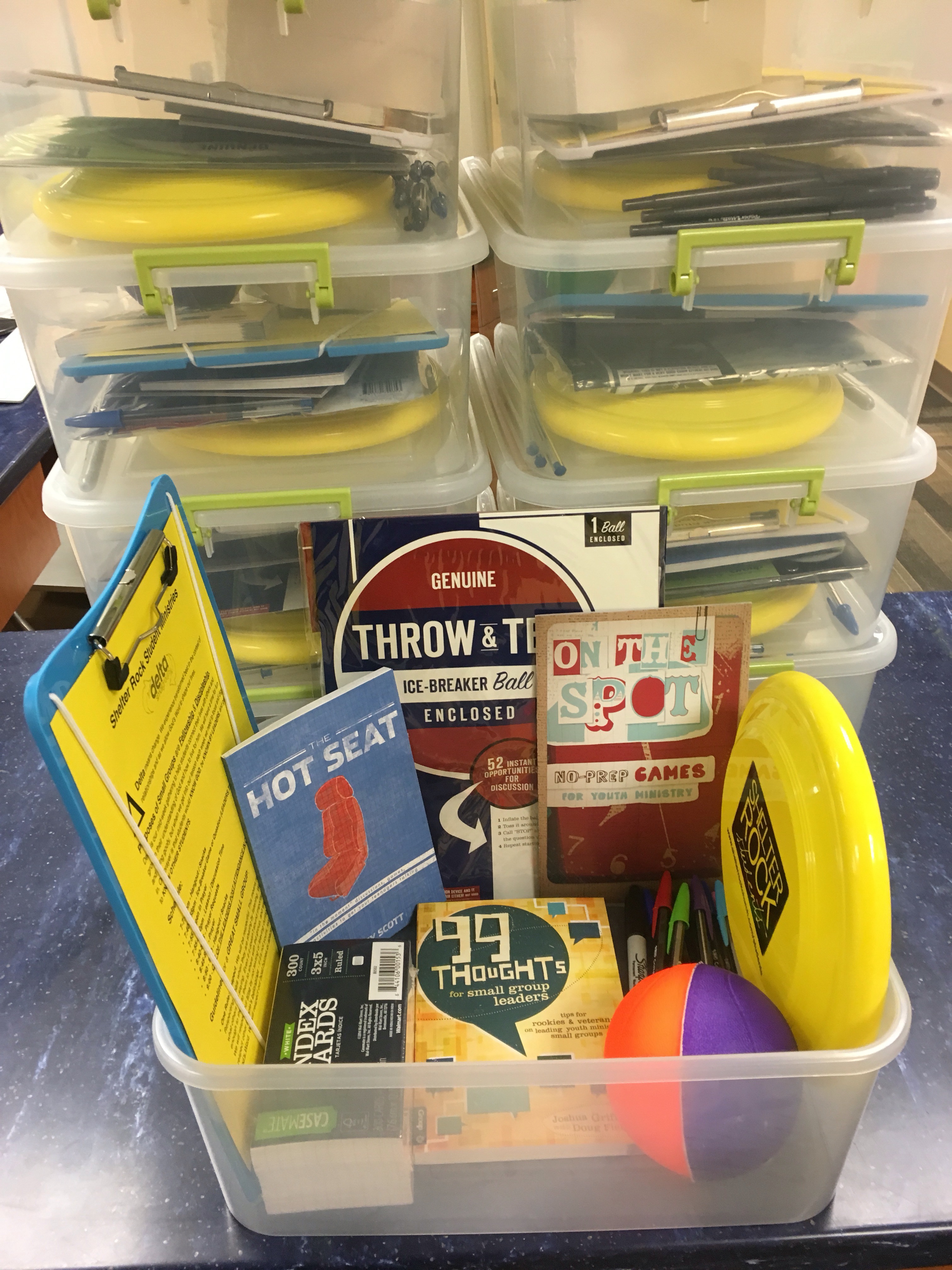
Small groups are the most important thing we do in our ministry to students. Today I put together kits for each of our groups to help them maximize engagement and eqip our leaders to be even more effective. You can put all kinds of things into a box like this. Our leaders already have thri curriculum content, so here’s what we put in ours:
- Small Groups Info Sheet (purposes of small groups, schedule, guidelines for meetings, tips and reminders for leaders)
- 99 Thought for Small Group Leaders
- Hot Seat
- On the Spot No Prep Games
- Throw and Tell Ice-Breaker Balls
- Nerf ball (can be used to designate who is allowed to share during discussions (i.e. If you have the ball, it’s your turn to talk.)
- Frisbee
- Clipboard
- Index cards
- Pens and Marker

Youth Winter Fest 2016 Recap Video
We have just returned from another amazing encounter with God at Youth Winter Fest. We are so thankful to all of the churches, leaders, students, and staff from 15 different local churches who came together as ONE CHURCH this weekend! God is building His kingdom and it is so exciting to be a part of it. Our speaker for the weekend was Brock Morgan, and we were led in worship by Tim Timmons. So great! Make plans now to join us next year January 6-8, 2017 at Tuscarora Inn in Mt. Bethel, PA!
4 Corner Dodgeball with a Twist
About a year ago my daughter Natalia, who was in 8th grade, introduced me to 4 Corner Dodgeball, which she had learned at school. Since then, we simply cannot play regular dodgeball if we have more than 20 students. The idea is simple. You have 4 teams, each in a quadrant, and they are all against each other. Having to defend balls being thrown, not just from in front of you, but also from your sides, adds incredible excitement to the game. Then, recently, I decided to try a twist. In the middle of the game, I yelled, “Rotate!” and teams had to move over to the quadrant to their left. Everyone started running to their new area, all while trying to avoid being hit while switching. The insanity of people moving while still playing was awesome! The students loved it and it kept them on their toes and the game exciting.
Small Groups Kickoff Night!
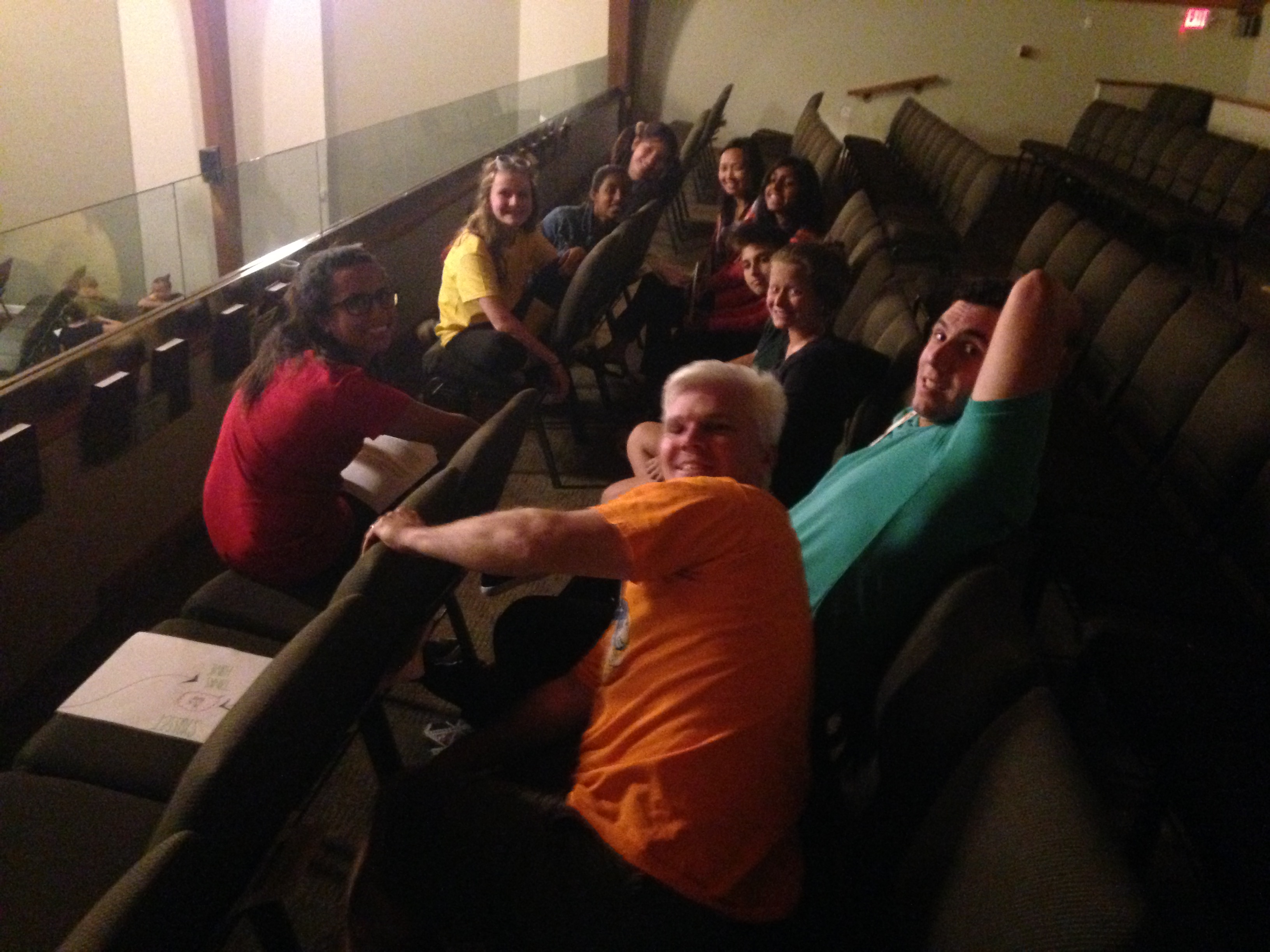
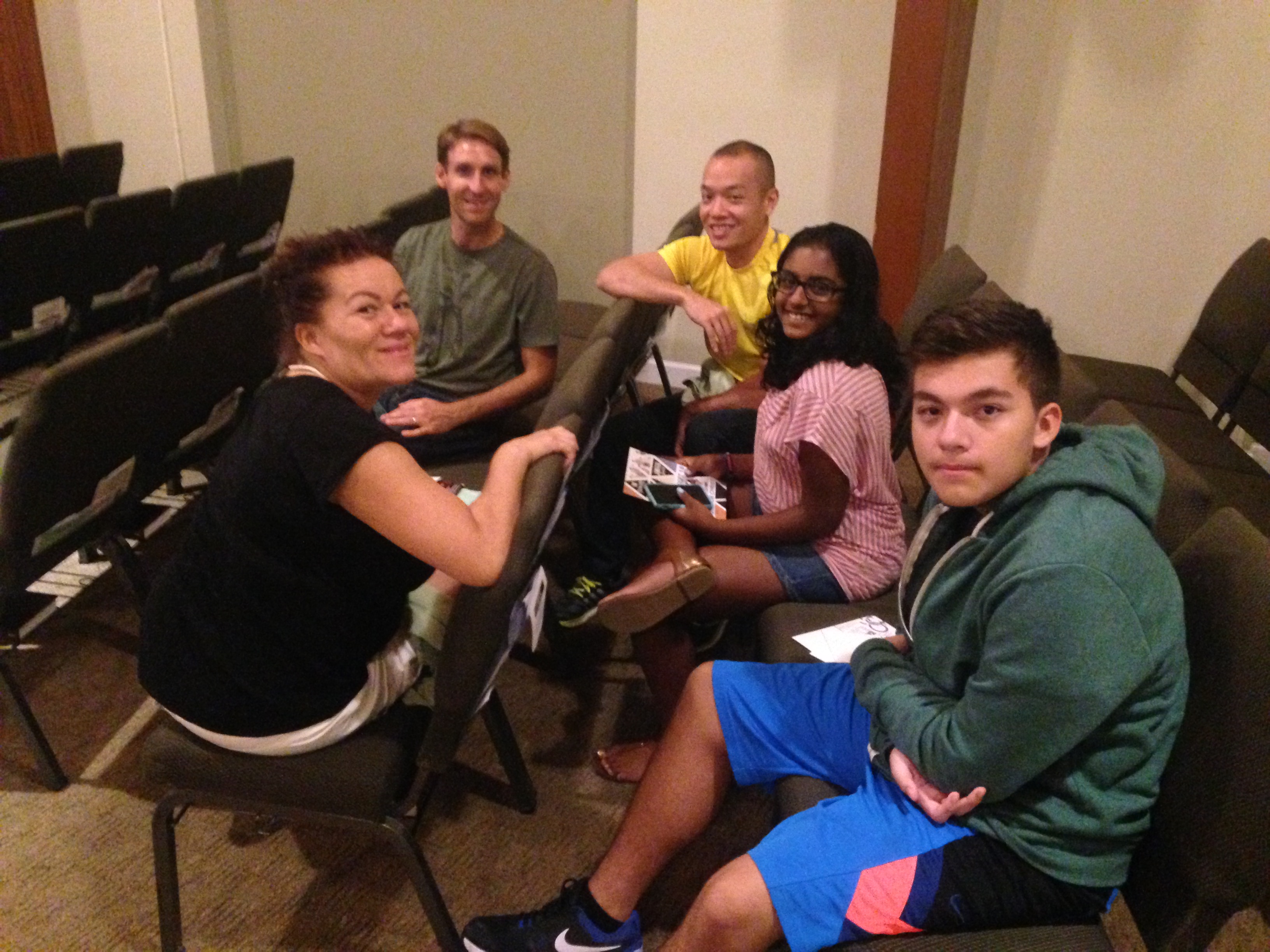
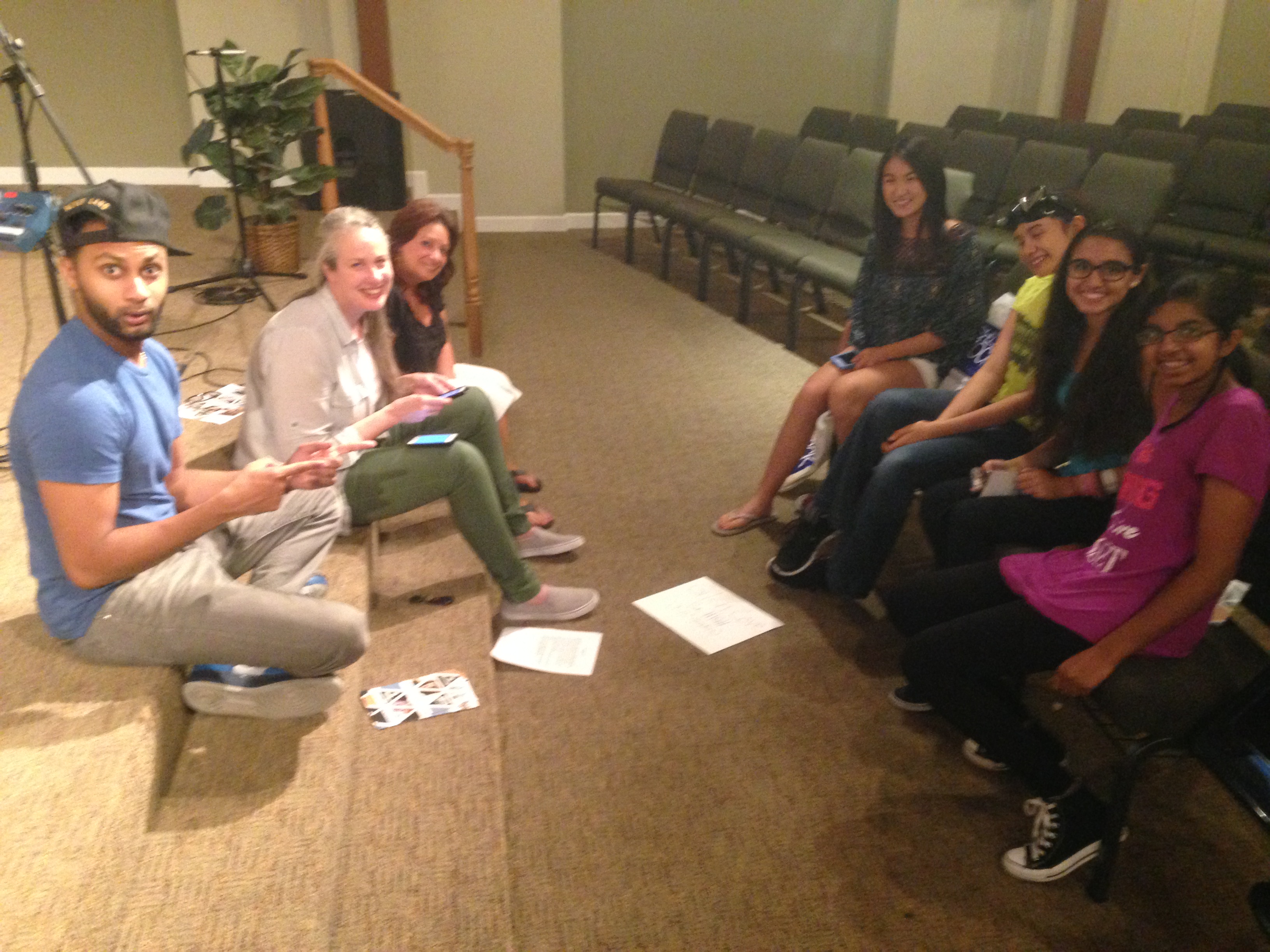
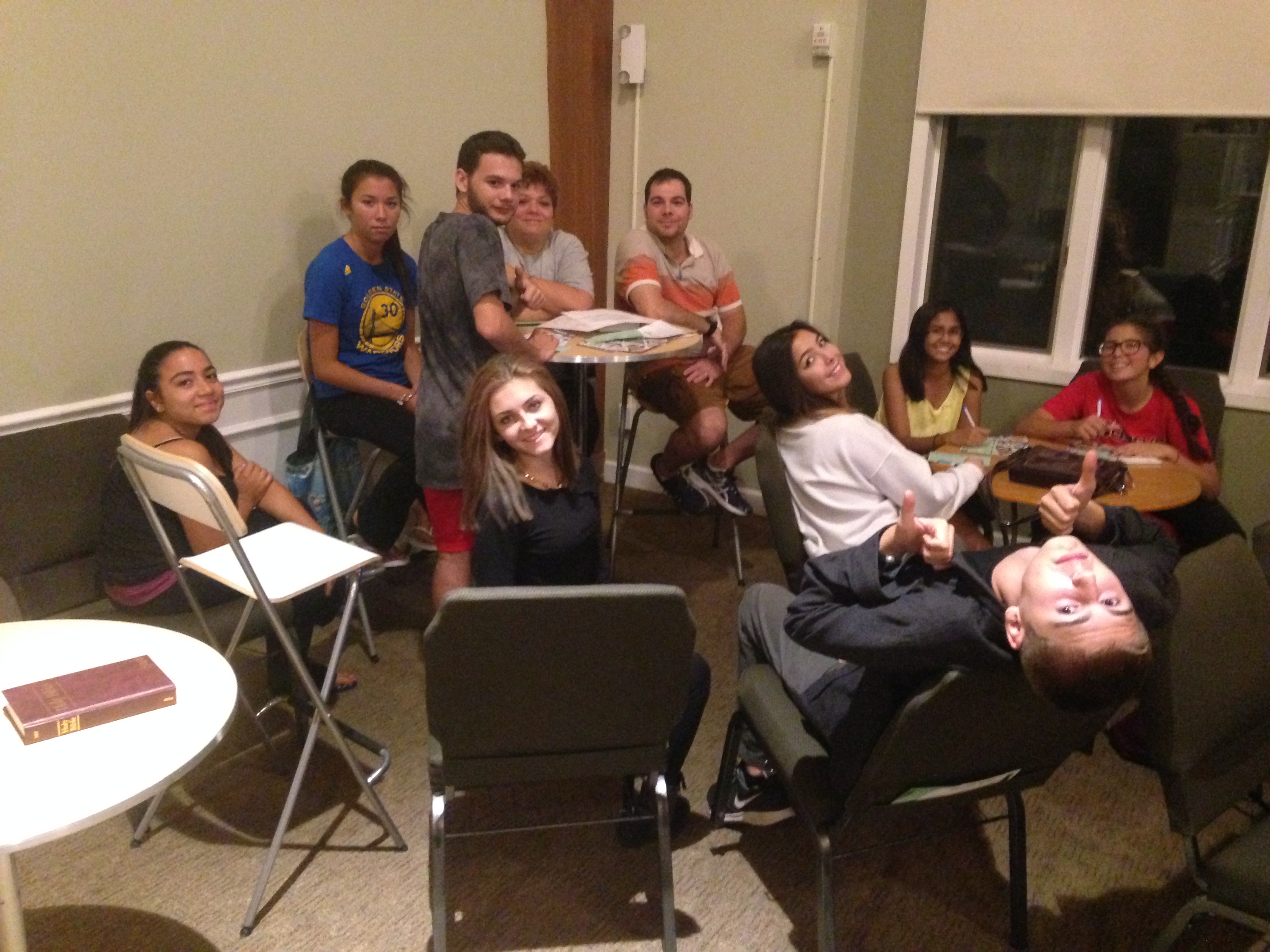
Last night we had our Delta Small Groups Kickoff Party. We all met at the church, had food, played some dodgeball, then I cast vision for small groups and our dream to see every student connected in a group. We introduced all of our incredible small group leaders then showed a preview video for Youth Alpha, the curriculum we are using in our groups this fall. (Yes, I know … there are a lot of Greek letters flying around here. I should tell you that before deciding to do Alpha in Delta, we ran a Beta test.) Finally, the students got into their groups to get to know one another and their leaders. I am very, very excited that we are adding two more groups this year, for a total of 7! I dream of the day we have 50 all over Long Island! Next week the groups begin meeting in homes, and I am praying and believing for an amazing year of connection, decisions for Jesus, and spiritual growth. If you are a student or a parent and you want information about groups, click here for times and locations.


 REVKEVJR.COM