10 Ways Youth Leaders Can Have Impact During Summer

stock-footage-two-girlfriends-lying-on-beach-and-chattingYesterday I wrote about why we change things up in the summer, pausing our regular weekly programs and offering fun events and a different discipleship venue. One of the reasons we stop our regular weekly programs is to give our adult leaders a break from the grind of prepping and leading lessons and so forth. BUT, that doesn’t mean they should totally disengage from students. Here are 10 ways adult youth workers can have an impact on students during the summer.

  1. Go to camp or on a missions trip with students. One week at camp or on the mission field can offer as much (if not more!) relational time with students than a full year of seeing kids once a week for Bible study, or before and after service.
  2. Attend summer events. For us, most of our summer events are designed to be fairly low-prep and to simply have fun together. As far as discipleship, I personally lead our summer Bible study. As such, adult leaders can simply come and be with students without the burden of prepping and facilitating.
  3. Lead summer events. If you happen to be an adult with the extra time on your hands during the summer, why not volunteer to help lead one or two or ten of the events.
  4. Champion summer events. Probably 75 percent of our summer events are planned for the evenings, but a couple of them do happen during the day. That inherently means many of our adult leaders can’t attend because of work. When that is the case, adults can still serve and have impact by championing what is happening with students. Shoot the kids a text and encourage them to attend, share the event on social media, etc.
  5. Take a student out for ice cream. Who doesn’t like ice cream during the summer? Whether ice cream, frozen yogurt, Italian ice, or (we’ll even expand it to …) coffee, breakfast, lunch, dinner, or dessert … take a few students out one-on-one. They will never forget it! I even offer to reimburse our leaders. (If you’re one of my leaders, I am reminding you of this.)
  6. Take some students to the beach. If you’re inland, take them to the lake or river or pool or water park. While you’re driving and hanging out, engage them in conversation about God.
  7. Have students over for a BBQ. Why not invite a handful of students to your home and grill out? Perhaps they’ve never been to your home. This is a great way for students to see you in another context. Plus, who doesn’t love grilling out in the summer?
  8. Do one-on-one mentoring with a core student. If your schedule permits, and you have the passion to do it, invite one or two of your core students to meet you for a Bible study or for mentoring in an area of their life over the summer. One thing I like about summer is that kids have more availability to meet during the day. Perhaps they can meet for breakfast once a week.
  9. Send notes. I am a big fan of snail mail. Everybody loves to get something in the mail. Whether it’s a card in the mail, a message on Facebook, a pic on Instagram, an e-mail, a text … pray for your students, then send them a little something to let them know you are praying for and thinking about them during the summer. Encourage them to be connecting and growing, and let them know you are cheering for them.
  10. Grow Yourself. Invest in your own spiritual growth and development so that you have more to offer students. Pick a book to read at the beach or on vacation that will help you grow in God and as a leader. Listen to a leadership podcast while you’re driving to Florida.


Operation Finish Well

I am about to share with you two of the most important things about good youth ministry, so read all the way to the end.

I know, I know. Probably 90% of you reading this live in places where school has been out for several weeks. But here in New York we find that keeping our kids in school for half of the summer is benef … no, wait, is utterly ridiculous! But, for (I am certain) politically-motivated financial reasons, most of our students are still in school.

Last year my good friend Laurie Bolton sent me an idea that she did with her students that I knew instantly I wanted to do. She delivered “study break” goodie bags to her students while they were in finals week. So, this year I went out and bought lots of junk food and little goodies, wrote a poem; we bagged them up, and divvied them up by zip codes among our team of awesome adult youth leaders who delivered the surprises to unsuspecting students. This, we called Operation Finish Well. It was awesome!

Perhaps you are a healthy food person and you are offended that we would deliver sugary goodness to our students. Someone even told me that the sugar would kill their precious brain cells, and that we should have taken them healthy snacks like fruits and veggies, etc. I get it. I understand. You’re totally right. We should have. But I had two thoughts about this … 1) We wanted our kids to be excited when they received the packages. 2) We are actually trying to help our kids learn humility. I’ve been told that the students in our area are really smart, and we think we are serving them and teaching them that they are no better than anyone else by killing off a few brain cells in order to be more average. I’m kidding, of course. lol! (Seriously, point noted.)

This whole operation highlighted two hallmarks of good youth ministry. 1) Stealing ideas, and 2) Junk food.

Feel free to re-steal (But give Laurie props for the idea!).

And feel free to give your students healthy food … which most students will consider junk food and promptly throw away. lol! (Sorry, I was in a joking-kind-of-mood writing this. I’ve been reading Food: A Love Story by Jim Gaffigan – the funniest book I have ever read. Post about that coming soon.)IMG_3359 IMG_3362

Passing the Leadership Baton

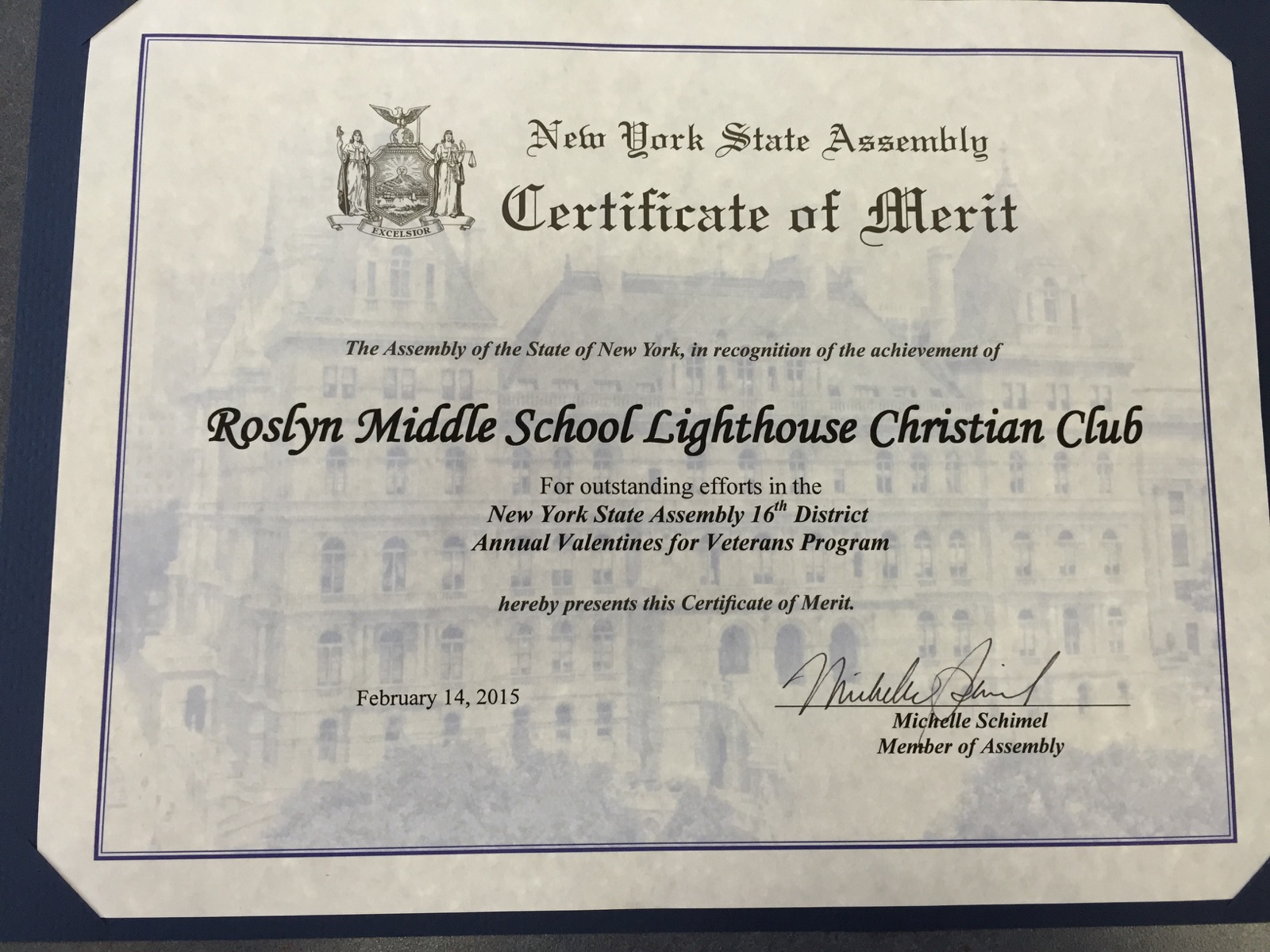
Many of you may remember the excitement we experienced 8 months ago when our youngest daughter Natalia started the first-ever Christian Club in her middle school. All year they averaged almost 30 students in weekly attendance, and it was awesome watching the influence they had in the school and beyond. A few weeks ago, they received a Certificate of Merit from the New York State Assembly for their project of sending Valentines to Veterans which is going to be framed and displayed in the school!

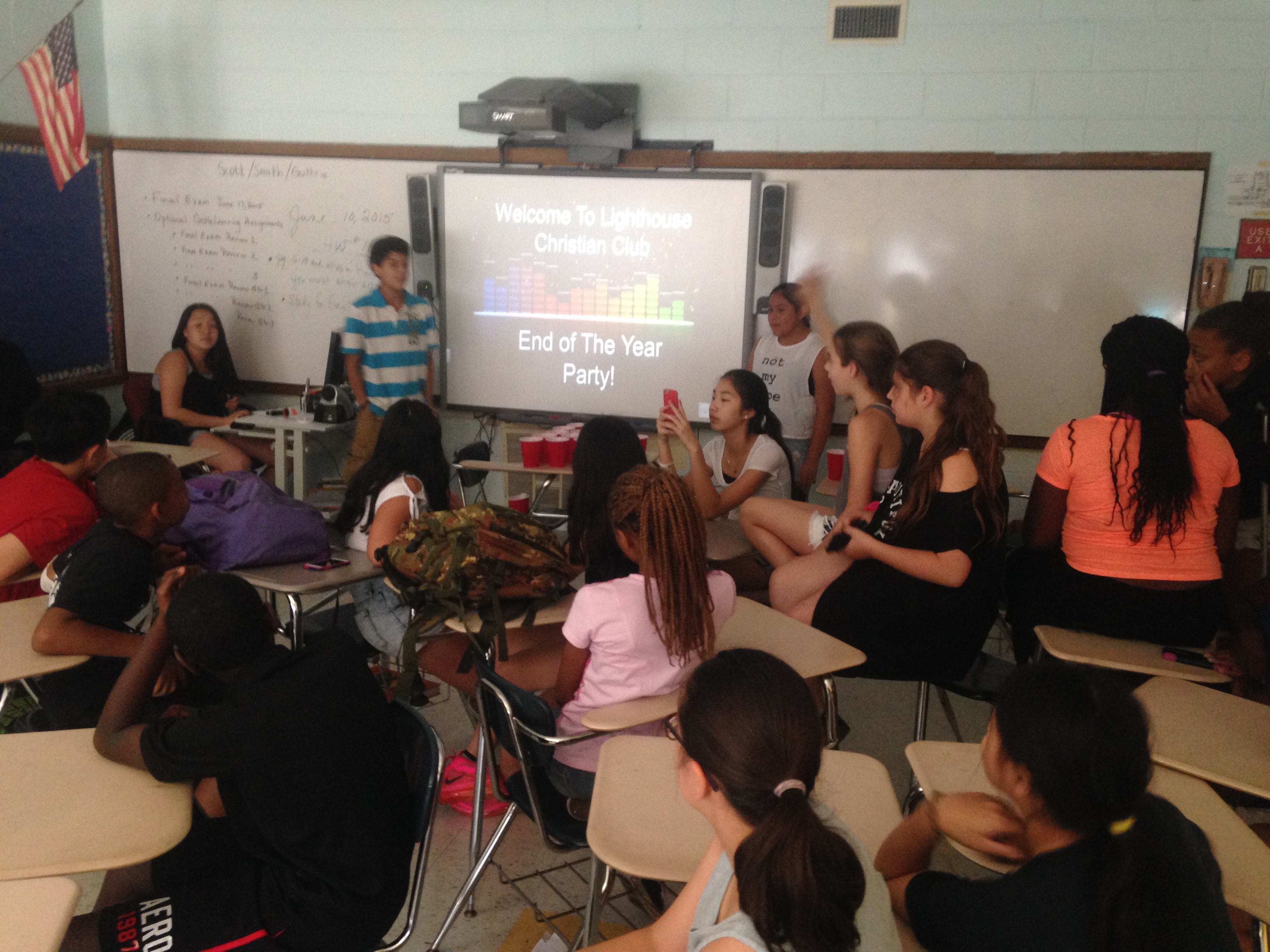
After an amazing school year, yesterday we attended the final club meeting of the year. We have been so proud of our girl for all of her hard work and leadership. She assembled a great team of her peers and led them as together they led the club all year. Perhaps the most impressive part of her leadership is that right from the start she recognized that as an 8th grader this was her final year in the middle school, but she wanted the club to continue long after she was gone, so she was looking for future leaders from day one.

About 3 months ago, she and her team really started praying, watching, and talking with the younger students who had been faithful and active in the club, and who had a desire to be lights in their school. Two months ago she approached two 6th graders and asked them about the possibility of them leading next year. After they accepted, she began training them, giving them opportunities to lead, and giving them leadership feedback. Yesterday, as we celebrated a great inaugural year for the club, Natalia and her team formally handed the baton of leadership to the aforementioned students and prayed over them.

IMG_3572IMG_3564 IMG_3569 IMG_3575

Video: Natalia Speaking at Youth For Christ Banquet

Last night was one of the greatest highlights of my life as a father and as a youth pastor. I had the privilege of sharing the stage with my daughter at the Youth For Christ banquet as she shared about starting a Christian Club in her middle school. Our family is so proud of her!

IMG_2615
Natalia with banquet speaker Pastor Dimas Salaberrios of The Bronx

IMG_2622

Youth Ministry in a Post-Christian World

51KjG3d-XpL._SY344_BO1,204,203,200_I recently read Brock Morgan’s book Youth Ministry in a Post-Christian World. In the book Brock discusses the major shifts we have experienced in our culture over the past couple of decades and how that has affected the students we work with in youth ministry. Because the world is a different place, by necessity, how we relate to and minister to students must change. Many of the ways we did ministry just a decade ago are no longer effective, and the expectations we had of students and our programs are no longer valid. But rather than sit back and miss the good ole’ days of youth ministry, Brock offers us a fresh perspective and a hopeful way forward.

One of the things that stood out to me in the book was the recognition that there seems to be a sad increase in the number of youth workers being fired these days. While there are certainly very legitimate reasons that some are released, more often than not, it is due to the perceived inability of the youth leader to get large numbers of students to come out to their programs. Morgan makes the astute observation that many of the senior pastors and supervisors in the church today were either youth workers or students themselves in the 80s and 90s when it seemed that all one had to do was offer pizza and some messy, crazy games, and kids from all over the community would come out to youth ministry programs en mass. In that era, success was defined in terms of numbers. What many overseers and decision makers today often fail to recognize is that those days are long over.

At the National Youth Worker’s Convention I attended last week, Dr. Kara Powell noted: “When I was a youth leader in the 80s and 90s, parents would call and ask us to have more activities for their students. Now when parents call, it is to apologize that their students can’t come because of they’re too busy.” In the book, Morgan does not suggest that counting is unimportant or that we should just resign ourselves to running programs no one will come to. Rather, he challenges us to change what we are counting. Success in today’s youth ministry should be measured much less in terms of attendance at our events, and much more in terms of individual care, how often we are getting out of our offices and connecting with students one-on-one or on campus, how we are encouraging and helping students become authentic members of the larger church body, how we are getting students involved in compassion and justice, how we are investing in families … These are things that matter and have lasting impact in students’ lives.

He also calls on youth workers to remember that we are engaged in a spiritual battle, and that as people on the front lines contending for the hearts of a generation, we need to be doing battle on our knees in prayer, and we need to be living in purity. Whenever there have been significant moves of God throughout history, the leaders were people devoted to passionate, faith-filled prayer and right, God-honoring living. Youth leaders must remain faithful to their primary calling of ministering before the Lord. Our ministry to students must overflow from our intimacy with the Father.

I highly recommend this book. I am looking forward to having Brock speak to our entire youth leadership team, and perhaps even our entire church leadership team. I believe he has a word for the church in our generation.

The Dream Has Come True!

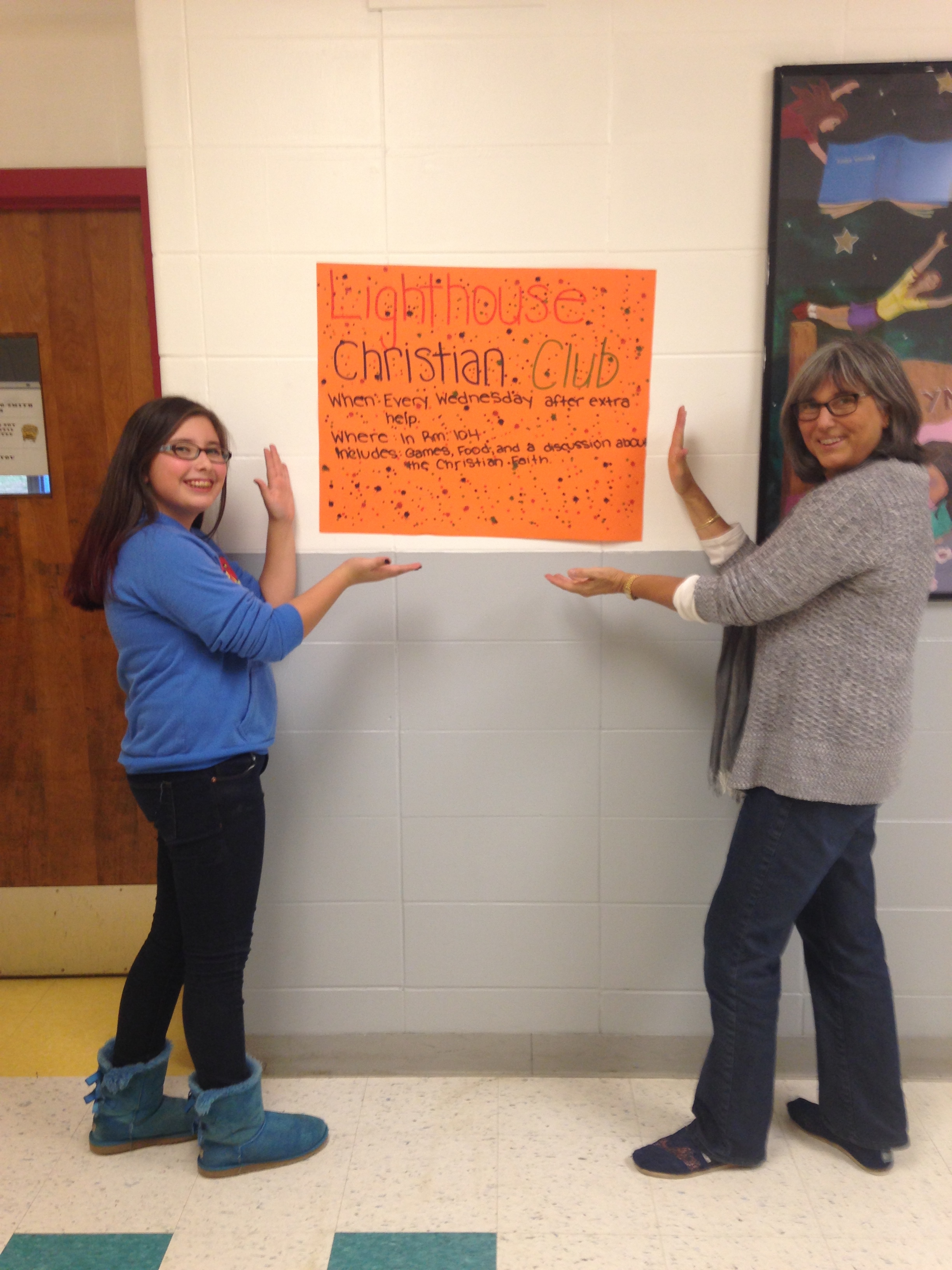
Today, after months and months of prayer and hard work, our daughter Natalia’s dream of starting the first-ever Christian Club at Roslyn Middle School came true! They had 11 students there for their first meeting, and they all left saying they had a good time. We are very thankful to the school administration for their support, to Mrs. Marx for supporting the club as their advisor, and to Emma Rucci and Long Island Youth For Christ for their guidance in walking Natalia through the process of getting the club started. We are SOOOO proud of our daughter who is such a courageous leader. Yeah God! Way to go Natalia! You are making an impact and leaving a legacy!

IMG_7708IMG_7709IMG_7692IMG_7711 IMG_7712


People Raising: A Practical Guide to Raising Funds

2011-new-peopleraising-book-250-200x300

There have been many times when I have considered working for a ministry that would require me to raise funds in order to support my family and the ministry. At this point I have not ended up going down those roads, but perhaps one day the Lord will call us on such a journey. The scariest thought when considering such a venture is whether or not one will be able to raise a sufficient amount to care for one’s family and work. Then, the intimidation of asking people to give to such a cause.

A number of years ago I was having lunch with a very dear friend of mine who had been working in a para-church organization for nearly 40 years, always operating the ministry and personally living off of the financial generosity of others. He was and is an incredible man of faith. I once asked him, “Isn’t it difficult to ask people for money?” I will never forget his response. “I am a terrible fund raiser,” he said. “I don’t ask people for money. I am a friend raiser.” He went on to explain that if one simply asks for money, it’s shallow and, in some respects, easy. But it is also ineffective. The key, he said, was to invite people into relationship, and in the context of relationship, as people got to know him, he was able to share his vision and people were able to sense his passion and commitment. Once they witnessed those things, many would jump at the opportunity to invest in the kingdom work he was doing. He was a great friend raiser.

I recently finished reading People Raising: A Practical Guide to Raising Funds by William P. Dillon. As I was reading I was thinking about my friend. Many of the principles in the book were the very things my friend had shared with me. I appreciated the author’s candor as well as his very practical advice based on decades of raising funds for worthy causes. I will say that, although his point was well made, and I don’t really have any alternatives, I personally wrestle with some of the realities of fund raising that seem very sales-y. Although he stresses that it’s about friendship not funds, at times some of his strategies felt less friendship-oriented and more like people were objects for use. He makes it clear that this is not the case, but it can feel that way. When you are building relationships with people with at least a hope that they will give money to you and your cause, perhaps there is just no way around it, but it would be hard for me to do some of the things suggested and not feel like I was using people. I also noted that some of the attention given to large-donors could easily slip into favoritism. Large donors do deserve special thanks, in a way, but those who give $10 a month as a sacrifice are doing no less than those who can easily give $10,000. Again, that author really stresses that this is the Lord’s work, these are the Lord’s people, and these are the Lord’s funds, but it could be a bit tricky.

I would recommend this book to any and all who are in the position of needing to raise support for their ministries. There are many great tips and pieces of practical advice from a man who has spent a majority of his life building relationships with people and inviting them to invest in the work of ministry with their finances.

I received a copy of this book from the publisher for the purpose of this review.

10 Things I Do To Support Christian Clubs

IMG_6367I used to think “I’ll just leave campus ministry up to great organizations like Youth For Christ and Young Life who specialize in working with schools.” However, in the past few years, as our culture has been shifting, I have realized that in order to be effective in youth ministry, I had to be more active and intentional in supporting students on campus as a major aspect of our church’s youth ministry. In addition to attending their games, concerts, plays, etc. (which I have always done), I have sought to encourage and support the student-led Christian Clubs that meet at schools. In doing so, I have realized that YFC and Young Life actually want youth pastors from local churches to be involved. Here are 10 ways I support Christian Clubs.

  1. Pray. Whenever I think of students throughout the day, I pause to pray for them. When I drive by their schools, I pray for students by name. I pray for Christian students to be faithful in their witness for Christ so that kids (and teachers and administrators) who don’t know Jesus will come know God’s love through them.
  2. Attend. I love to attend Christian Clubs and just be a fly on the wall. Currently I attend 3 clubs in our area each week, and I visit a few others throughout the year. It’s interesting to observe how each one functions. They’re all similar, but all unique.
  3. Speak. Occasionally a club will invite me to speak, which I always enjoy. I love the opportunity to share the gospel with those who are seeking, and to encourage the Christian students.
  4. Food. Kids love free food. Sometimes I randomly show up with pizza, tacos, or donuts. (Note: Always communicate with the club leaders ahead of time in case they already have food planned.)
  5. Fundraisers. Each year one of the clubs does a pizza fundraiser. I use some of our youth ministry budget to buy a bunch of pizzas and donate them to the club. I have also done things like printed materials for them. (Important: Don’t give them money as that can cause unnecessary questions and problems for the club.).
  6. Transportation. Here in New York, most of the Christian Clubs meet after school. Sometimes kids need transportation in order to participate. I offer to take kids home if they need a lift. (Note: Follow your church or organization’s guidelines for transporting students in accordance with insurance policies and safety practices.)
  7. Feedback. As I am a fly on the wall in the clubs, I can observe things that they do well and things that they can do better. After the meetings, the club leaders usually meet together to debrief and plan ahead. Sticking around for these meetings is an opportunity to help them think through things strategically.
  8. Soul Care. I really enjoy meeting with the leaders, not just to talk about the ins and outs of the clubs, but to talk about their own soul care. It’s not just about having a cool club, but about ministering out of the overflow of their own hearts, and that begins by cultivating their personal relationships with Christ.
  9. Resource. What do clubs need to succeed? Bibles? Mentoring? Leadership training? How can I provide that for them? Recently my own daughter had the dream to start the first ever Christian Club in her middle school. I networked and connected her with my friends at Youth For Christ who met with her, provided her with a manual to help her with all of the logistics, and met with her to mentor her. A Youth For Christ staff member and I both accompanied her when she met with school administration. We have sought to give her everything she needs to get her club going and build it for success.
  10. Leadership. Hands down the most important thing that student leaders need to be reminded of is the importance of developing other leaders. It’s easy for them (and all of us) to get caught up in the now. The club may be going awesome, but what will happen next year when you graduate? The one flag that I am constantly waving before club leaders is a long-term vision for the club. When they graduate, who will take over the club? How will they be selected? Will they be ready to lead when you leave? What are you doing now to encourage and empower them to lead? This is the hard work of leadership. Helping current leaders identify future leaders, and equip them to lead once they leave is of utmost importance.

I See You At The Pole

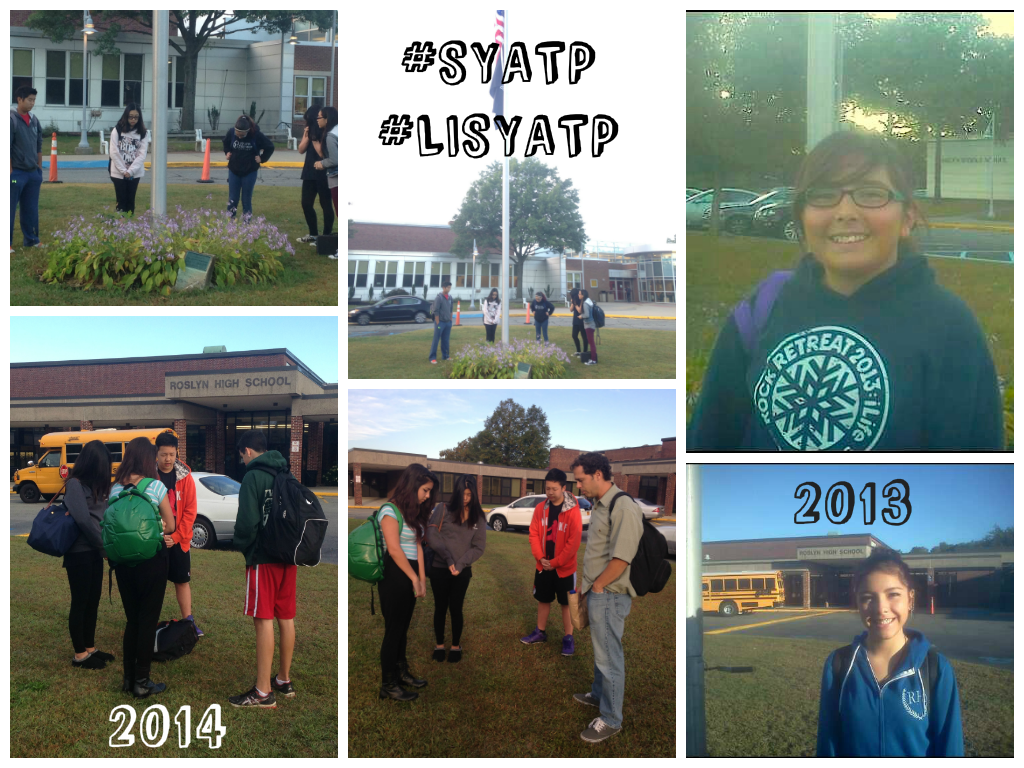
SYATP_RoslynSee You At The Pole is a prayer rally where students meet at the school flagpole before school to lift up their friends, families, teachers, school, communities, and nation to God. It is a student-initiated, student-organized, and student-led event that happens one day a year in September all around the globe. It is a day committed to global unity in Christ and prayer.Last year on this day, I woke up early and took my daughters to their respective schools for SYATP. At each of their schools, they were the only ones to show up. They prayed anyways. As I pulled away from the school, I had a few emotions going on inside of me. I was proud of my daughters for standing up and praying, even if it meant doing it alone. I was sad that more kids didn’t show up. I was determined to pray prayers of faith and believe that God was and is working, despite what we see. As I was driving home, I felt God whisper to me, “Tell your girls that although they didn’t see anybody else at the pole, I saw them at the pole, and I am pleased with them.” I sent them a text later in the day to that effect to encourage them.

This morning, one year later, I woke up early and did the same. This time my daughters were on their phones inviting friends to join them. I told them that if even one other person showed up, it would be double from last year. I am happy to report that 6 students showed up at Natalia’s middle school to pray. As we wrapped up an administrator approached saying, “The kids were drawing some attention, so I was asked to come find out what is going on.” I told him about SYATP and that they kids were gathering together to pray for the school, including him. He shook my hand and smiled. I then went home and picked up Claudia and we went to the high school, and 4 students and 1 teacher showed up. When the kids finished praying, I left to walk to my car, and I was stopped by a school employee who asked, “What were the kids doing over there?” “Praying,” I responded. “Are you guys Christians?” he asked quite enthusiastically. I told him we were and he lit up, telling me what church he goes to. It turns out I know the pastors of his church.

God moves when we pray. Not only do I believe He hears and responds to our prayers in a vertical way (God to us), He also allows our prayers to have an impact on those who are witnessing us pray (horizontal). People ask questions which can lead to spiritual conversations, Christians all of a sudden discover that people they see every day are believers, and people are challenged to examine their own faith. Pretty cool. Today as a dad, youth pastor, and member of the community I am proud of my daughters and all of the students who prayed today. And remember, there may only be one “official” day of prayer, but we are called to be people or prayer 24 hours a day, 365 days a year. PRAY!

Another Youth Ministry 1st …

Yesterday I went to my first ever cross country race in support of four of our Shelter Rock Church students. They all did really great. I was cheering for them near the finish line, and gave each of them a Gatorade on which I had written a note to them with a Sharpie.  It was awesome talking with them and meeting their teammates/school friends. One mom wrote me and said, “[My son’s] friends thought you were a very cool youth pastor.” I was relieved to know that I didn’t embarrass them. Really great time and so proud of our students.

IMG_5910