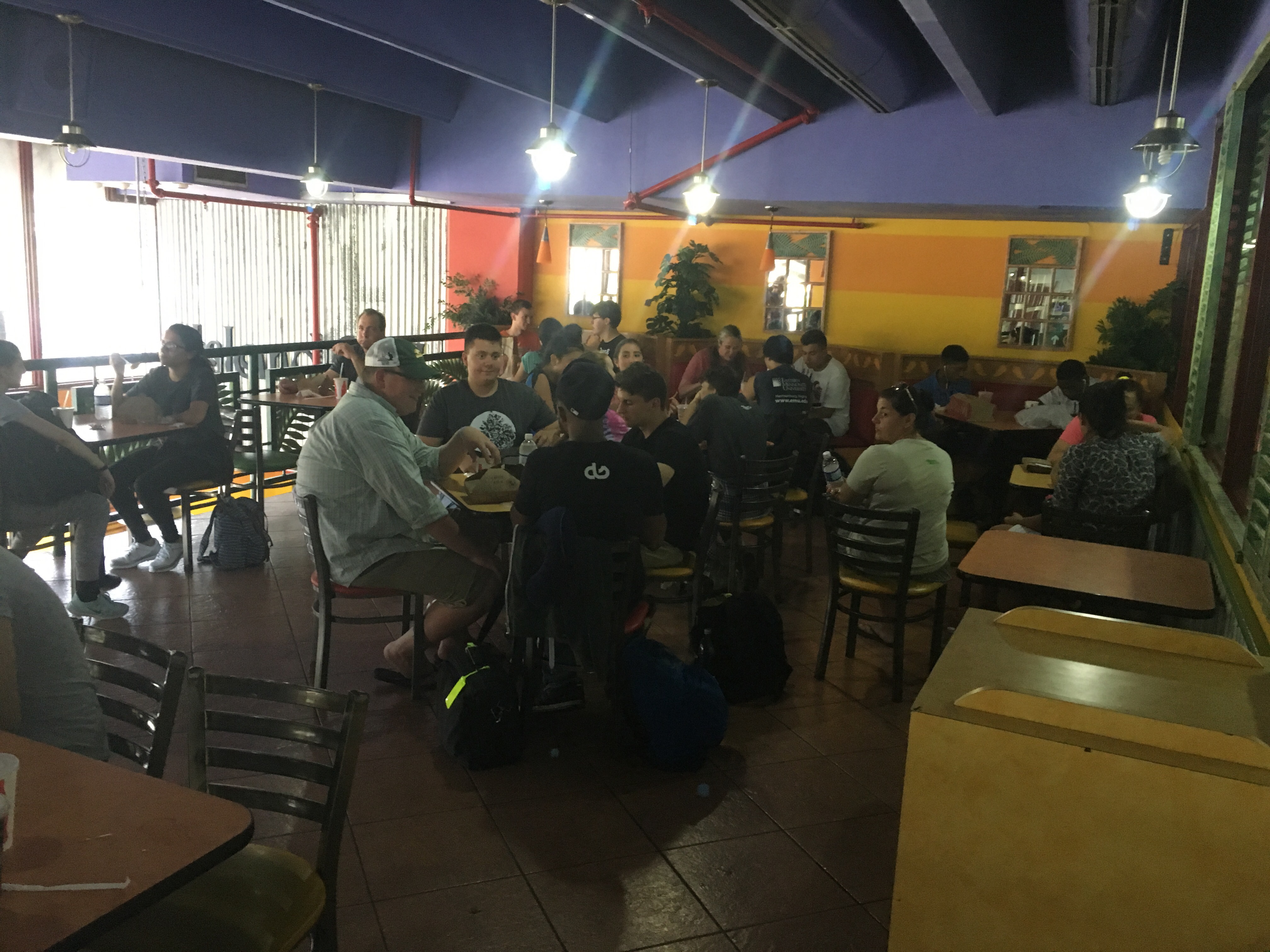
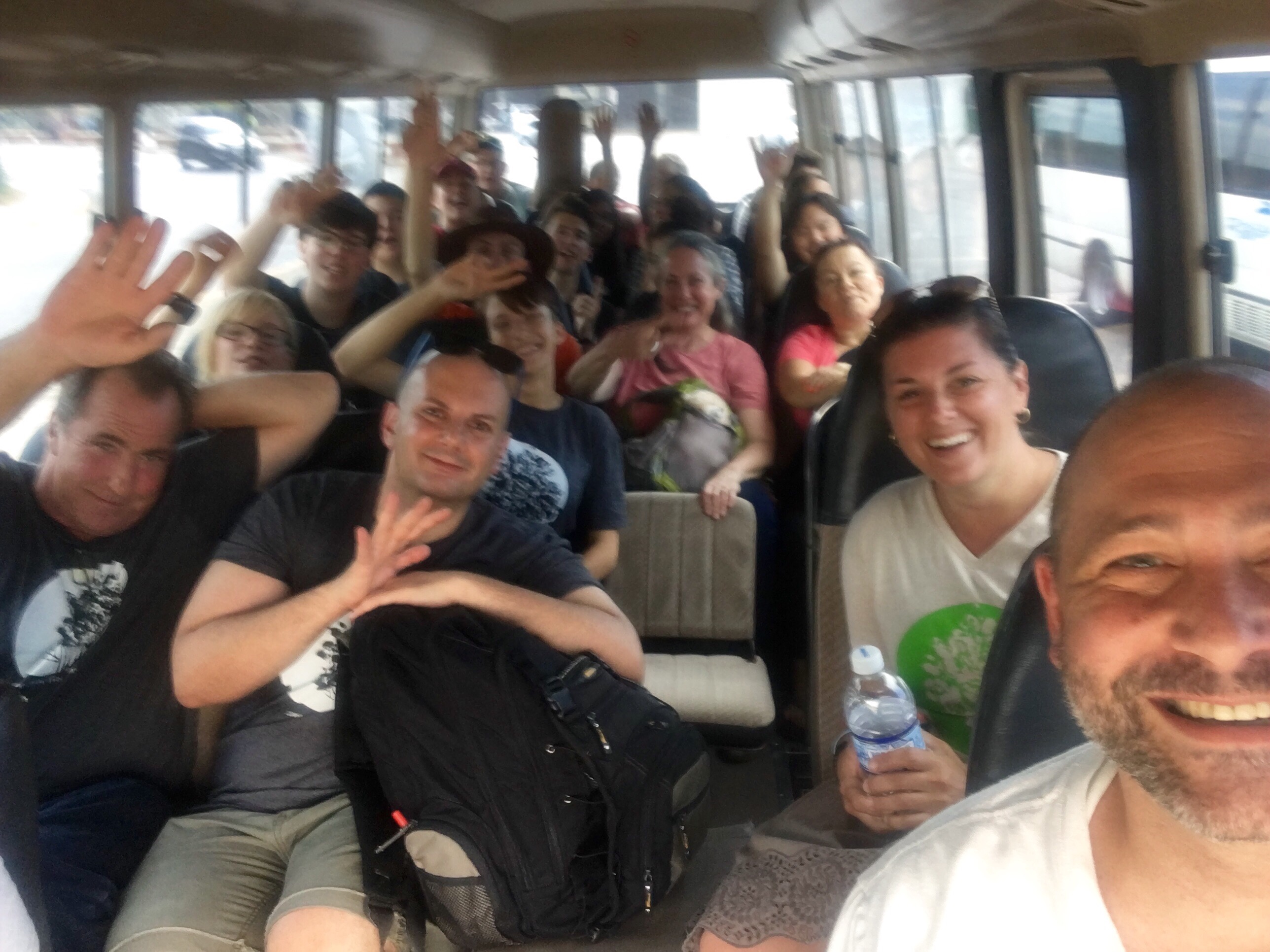
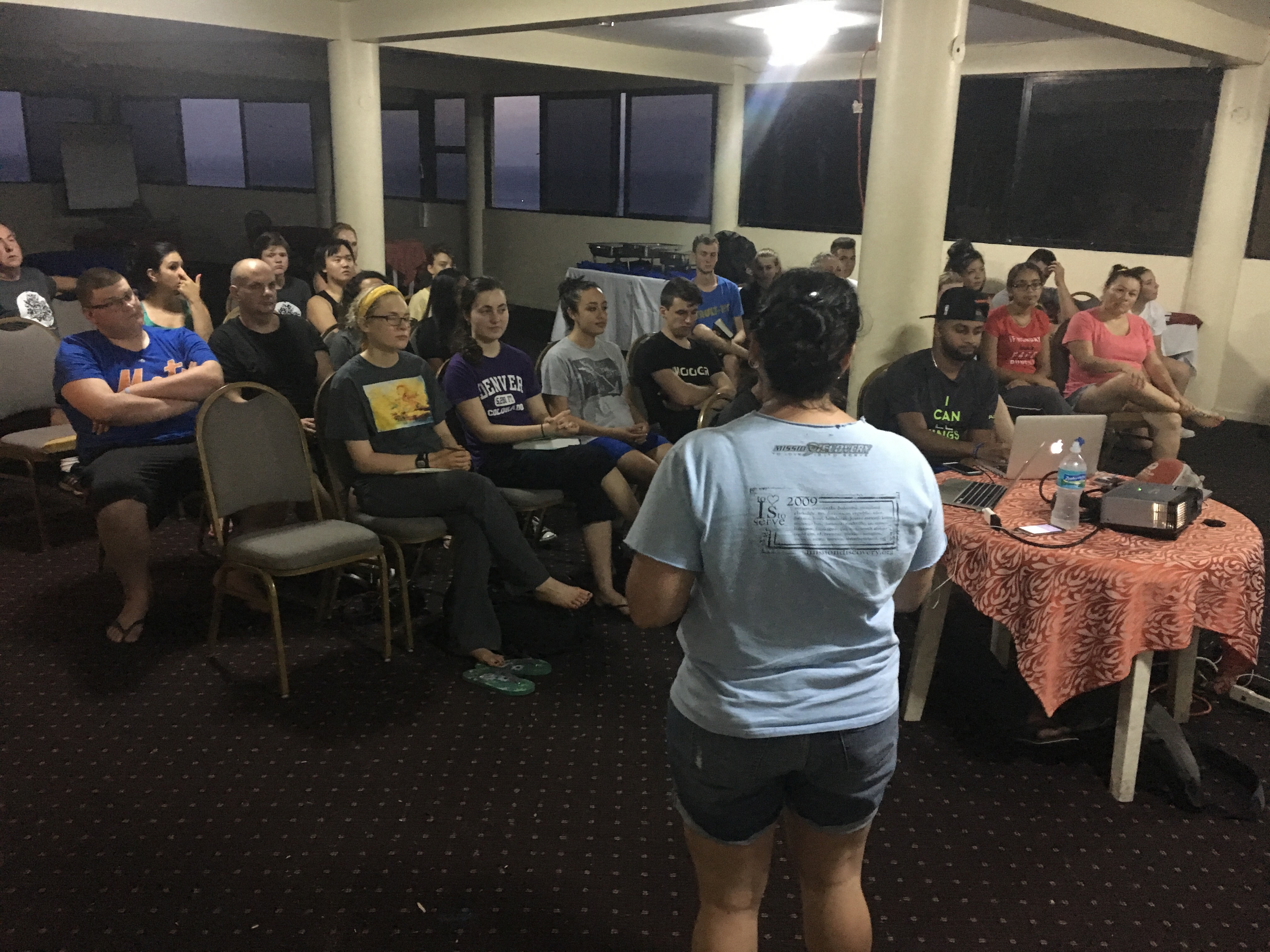
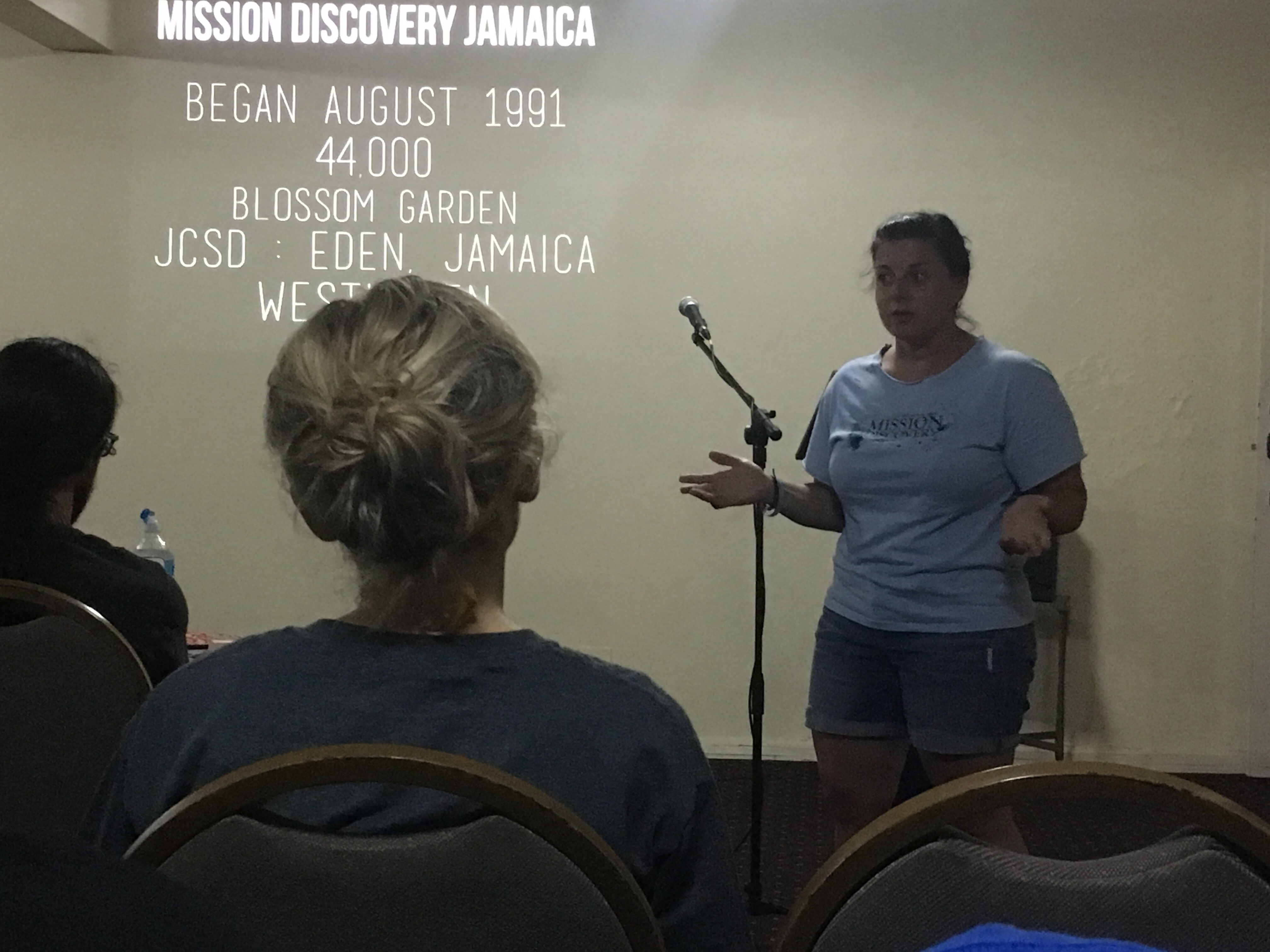
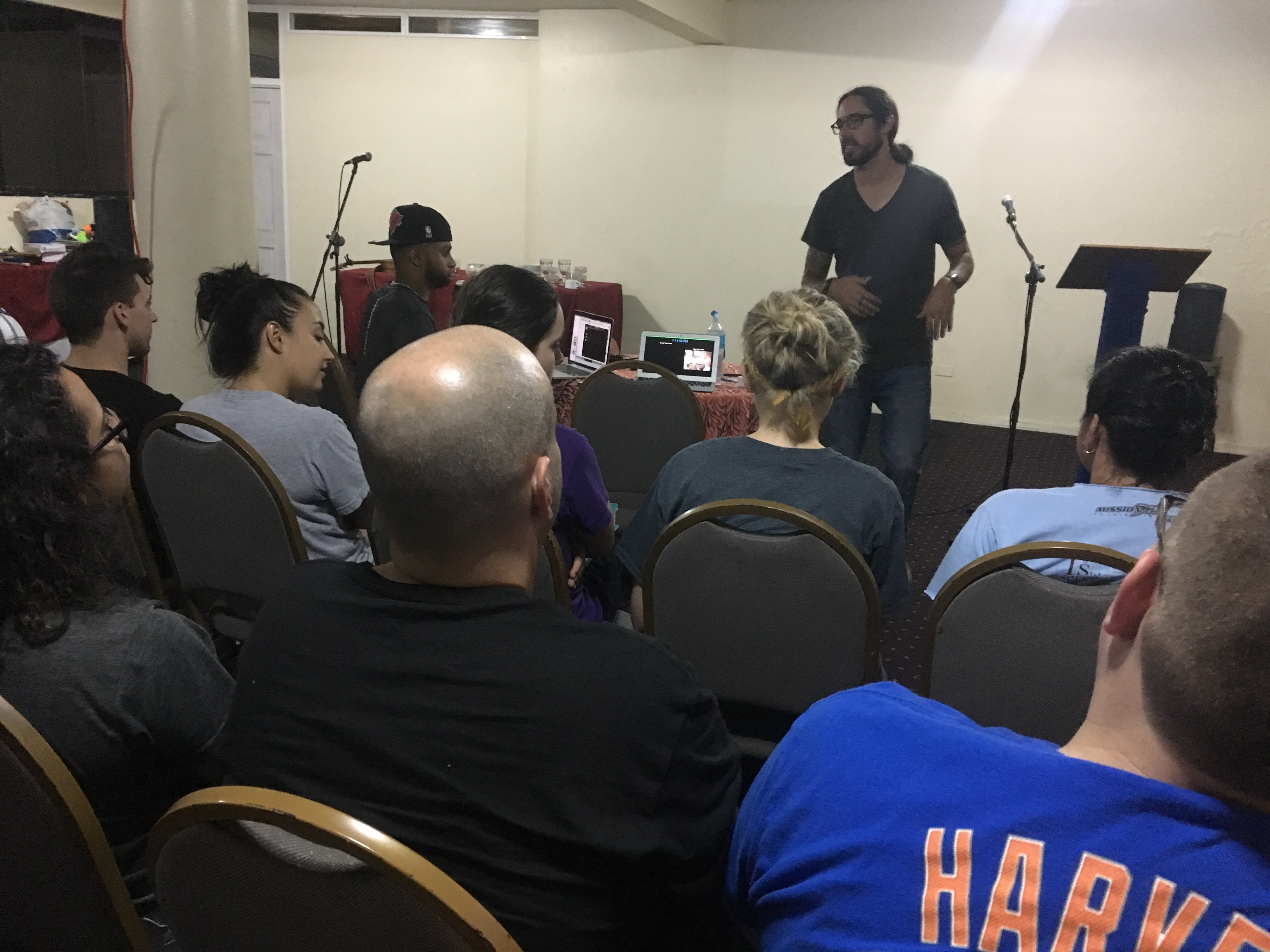
We arrived safely in Jamaca at noon today. After lunch we got settled into our rooms, enjoyed a quick dip in the pool, then had dinner, orientation, worship and sharing. Matt and Tabitha both shared devotions with our team, then we got into small groups to discuss our hopes for the trip and pray for each other. Tomorrow our service begins! We will be serving at three locations this week. Thanks for your prayers. Everyone is in good spirits.



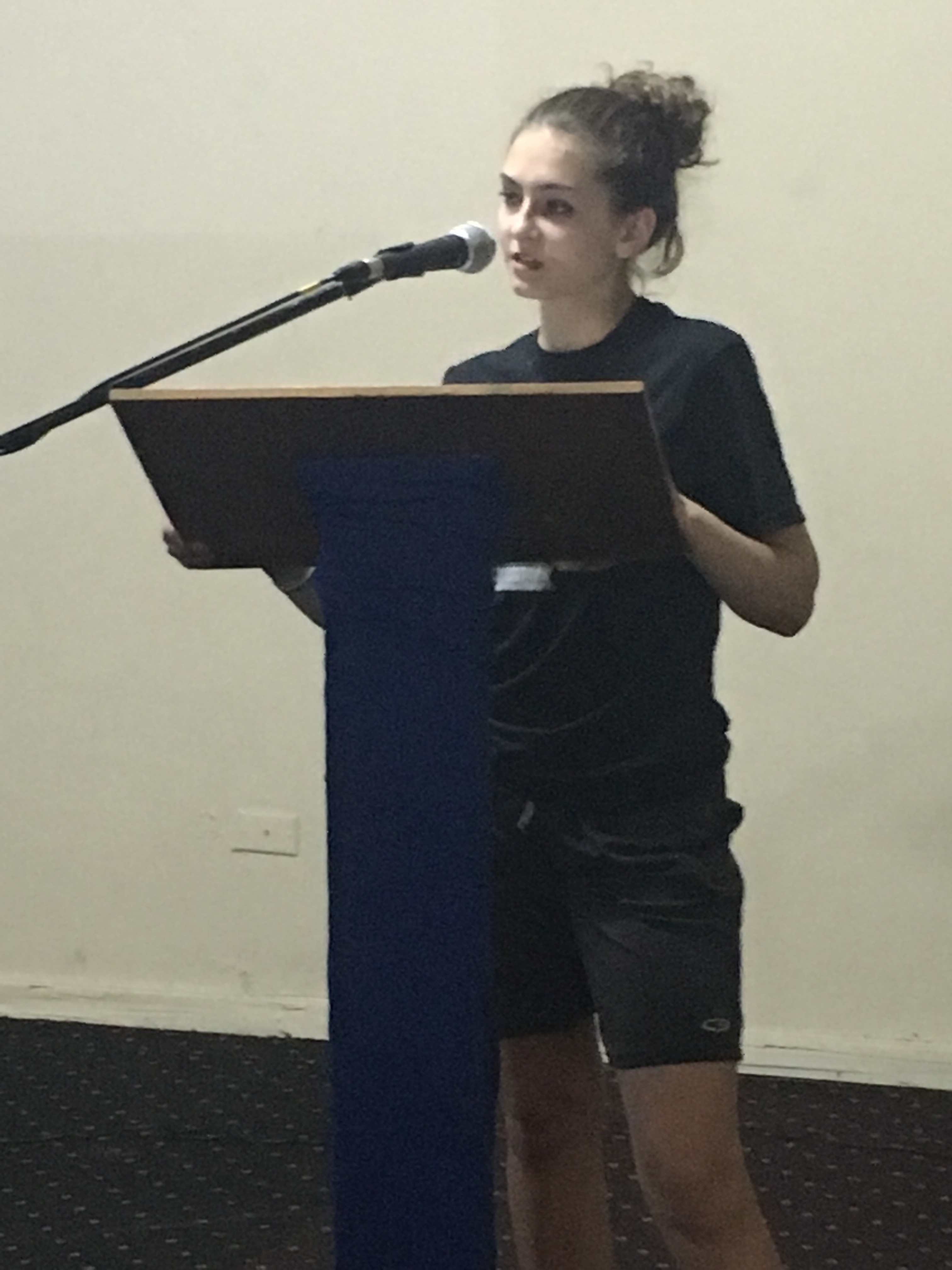
Claudia’s Graduation
It’s hard to believe that our baby Claudia is now a high school graduate! We are ao proud of her accomplishment and more importantly the beautiful woman she has become.












Challenging Christianity
 One of my favorite lines that I repeat often to leaders, parents, and even to students, is that my job, our job in youth ministry (and as parents!) is not to entertain students, but to equip them for life. Our vision statement for our youth ministry is to see students become fully-devoted, passionate, life-long followers of Jesus. In order for that to become a reality, they must be challenged in their thinking and in their practice. We have to stretch them to do hard things … uncomfortable things.
Growth only happens by doing things you’ve never done before.
Just the other day, my friend Thom Schults, founder of Group Publishing, said, “Too many people think if it’s uncomfortable it must be wrong. This is one of the biggest problems in the church today.” How true a statement!
Then, just this morning I was reading Vanishing Grace by Philip Yancey in which he quotes Shane Claiborne who said, “I am convinced that if we lose kids to the culture of drugs and materialism, of violence and war, it’s because we don’t dare them, not because we don’t entertain them. It’s because we make the gospel too easy, not because we make it too difficult. Kids want to do something heroic with their lives, which is why they play video games and join the army. But what do they do with a church that teaches them to tiptoe through life so they can arrive safely at death?”
As I am writing this, my daughter is texting me about some of the challenging realities of our upcoming mission trip to Jamaica. Because we love students and want to help them see the world as God sees it and want them to have a bold, mature faith, we do not shy away from difficult situations. Of course, safety is very important, we aren’t talking about being stupid and rash. I want to be very clear about this. We do indeed take safety very seriously. That being said, the truth is, if safety was our only consideration, we would never go anywhere new or do anything we’ve never done before. We have to have something higher than safety, and that is a vision.
God’s vision is for the whole earth to be filled with the knowledge of the glory of God, and we are called to be a part of the advancement of His kingdom. We are called to be agents of light in a dark world. We are to take the light of Christ into dark places, and that inherently means we have to do hard things. So, we go with God’s vision, we go with God’s power (the Holy Spirit living inside of us who gives us wisdom and courage), and we go with God’s promises (not to be free exempt from trouble, but that He will be with us as we go through trouble). Therefore, we say yes to mission of Jesus, even when we don’t know exactly all that will happen, and we move forward with faith as our guide, not fear. Just some thoughts I have as I am spending time with Jesus this morning. I hope they are encouraging, challenging, and helpful.
The People You Meet on Planes
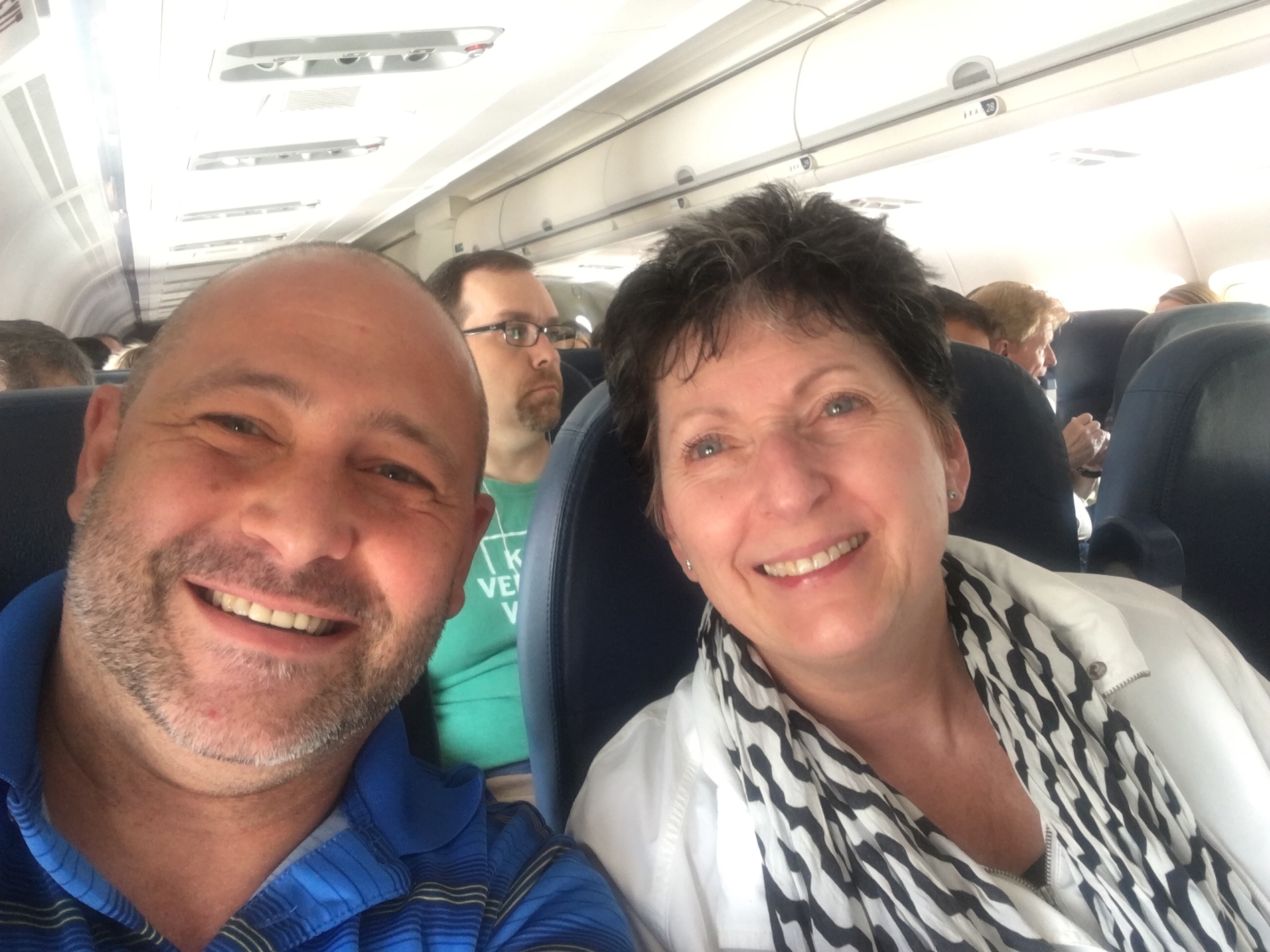 The longer I walk with Jesus the smaller the world gets. I just had another one of those INSANE connections while traveling that only God can orchestrate. Yesterday I bought the upgrade to the exit row for my flight from Detroit to Denver. The lady from Michigan seated next to me, named Marlene, and I engaged in a little small talk, then we settled into our individual reading, uncomfortable napping, etc. I was reading some Philip Yancey and was also working on a wedding I am doing in a few weeks. With about ten minutes left in our flight, the woman inquired as to what kind of training I was going to Colorado for. I told her it is for a camp that I am speaking at this summer. Putting this together with the book I had been reading she asked if I was a pastor, to which I replied I am. She told me her husband had been a pastor and now leads a missions organization. I asked what part of Michigan she was from, and she said, “Rochester Hills.” I told her I used to attend church in the neighboring town of Oxford 20 years ago. I asked if she had heard of Christ The King Churh, and her eyes got really big. “That is the church my husband was a pastor at. His name is Tim Cummings.” I totally remembered him. Not only did we attend that church, we were involved as volunteers in the youth ministry, were (and still are) friends with many people from the church, including several who we had attended Bible college with, and the youth pastor, our good friend Jon Waters asked us if we could help start the youth group at their church plant in Lapeer, Michigan which we did until we moved back to New York. There is no doubt we met 20 years ago during our time at Christ The King, and it was just incredible to find ourselves – a person from New York, and a person from Michigan – sitting next to each other on a plane all these years later. What an amazing thing the family of God is!
3 Ways to Maximize Your Summer

Summer. What does summer mean to you? Maybe sleeping in and playing video games all day. Maybe it means working on your muscles and tan to try to impress members of the opposite sex. While there is certainly nothing wrong with getting a little extra rest, doing something fun and relaxing like playing video games, getting in shape, or even showing interest in the opposite sex, I wonder if you might consider making something more of your months off of school this summer.
I want to be one of those people in your life (hopefully not the only person in your life) to challenge you to do something significant with your life this summer. I see way too many students do very little of value or lasting significance during the summer months. It saddens me to see squandered opportunities, unfulfilled potential, or worse, students moving further away from God, and sometimes even doing regrettable things. This summer here are three things I would challenge you to do:
- Get rest, but don’t be lazy. Sleep is a crucial for health. Summer is a great time to get some extra sleep. You can get some much-needed rest, not just physically but also mentally, and emotionally. The biblical concept of shalom is something that God intends for us to embrace. It means peace, completeness, welfare (health) in all areas of life. Rest is an important part of experiencing the shalom of God. Rest means relief, quietness, recreation, and peace. It is a time to enjoy the fruit of your hard work. Even God rested after He finished creating the world (Genesis 2:2-3). Laziness is another thing altogether. Laziness means a lack of desire to expend effort. Laziness means you don’t do anything. While the Bible tells us we need to rest, it warns us against laziness (Proverbs 13:4; 20:4; 20:13; 21:25; 24:30-34). Rest doesn’t mean laziness; it means doing things that will bring you health and refreshment. The word recreation means to do things that re-create you — things that make you feel alive again. This summer, do some things that will refresh you.
- Work hard on things that matter. Don’t let the only thing you improve this summer be your body. Invest in things of value. Deepen an important friendship. Do a Bible reading plan. Find a way to serve your community. Share your faith with your friends. Help out with VBS. Go on a missions trip. Do something that matters this summer.
- Stay connected to the right people. If you want to not only survive but thrive this summer you need to stay connected to people who will help you remain spiritually healthy and challenge you to grow in Jesus. Hebrews 3:12-14 tells us that staying connected is the key to avoiding the traps of sin (and we know that there are plenty of traps out there during the summer). It also says, “And let us consider how we may spur one another on toward love and good deeds. Let us not give up meeting together, as some are in the habit of doing, but let us encourage one another—and all the more as you see the Day approaching” (Hebrews 10:24-25). This summer, participate in all of the fun events we do. Get together with friends from small group. Go to summer camp with us. Don’t just veg out this summer. Grow spiritually, relationally, and do something that matters.
How to Prepare and Share a Devotional
 As a Christian in community, there are likely to be times when you are asked to share a devotional — maybe in a small group, on a missions trip, at camp, on a retreat, etc. This can feel intimidating if you think, “Woe! I am no pastor. I could never see things in the Bible that they see, let alone share them with other people.” This thinking contains several false beliefs.
- “I have to be a pastor.” The whole Reformation of the 1500s was to refute the thinking that only professional pastors can understand the Bible and teach people what it says. While some people have the gift of teaching and can communicate the truths of the Bible in a more effective way than others, the Bible teaches the priesthood of all believers (1 Peter 2:5), and that God can speak to our hearts directly, because the Holy Spirit who helps us understand God’s Word lives within each of us (John 14:26; 1 John 2:27).
- “I have to be really smart.” Another false belief is that understanding the Bible is simply an academic exercise. The truth is that the Bible is the living Word of God (Hebrews 4:12), and understanding and applying it to our lives is a matter of the Spirit of God enabling us to do so (1 Corinthians 2:14-15).
- “I have to be a good public speaker.” Some people are naturally wired and gifted to be communicators in front of people. Others are not. The good news is that sharing God’s Word in a devotional setting isn’t about eloquence. It’s simply about telling people what God is showing you in the Bible.
When we are living in community, it is important to share with others what we are learning. Paul told Timothy, “The things which you have heard from me in the presence of many witnesses, entrust to reliable people who will also be qualified to teach others” (2 Timothy 2:2). He wrote to the Colossians, “Let the message of Christ dwell among you richly as you teach and admonish one another with all wisdom through psalms, hymns, and songs from the Spirit, singing to God with gratitude in your hearts” (3:16). And he said to the Corinthians, “What then shall we say, brothers and sisters? When you come together, each of you has a hymn, or a word of instruction, a revelation, a tongue or an interpretation. Everything must be done so that the church may be built up” (14:26).
So, here are some simple steps to take in preparing a devotional. Writing is important in this process. For me, I underline key words or verses in my Bible. I jot down notes, questions, thoughts, ideas, etc. as I am preparing. In the preparation process below, you will find all kinds of questions and thoughts to consider, which you should scribble down responses to.
Preparing a Devotional:
- Pray – Sometimes you will have a passage of Scripture assigned to you. Other times you will be given the freedom to find a passage to share. Whatever the case may be, prayer is the essential first step in prep. Thank God for the opportunity He has given you to share from His Word. Invite the Holy Spirit to lead and guide you as you prepare, and help you understand what He wants you to learn. Pray for the people you will be sharing with — that their hearts and minds will be open to receive God’s Word.
- Study – 2 Timothy 2:15 says, “Do your best to present yourself to God as one approved, a worker who does not need to be ashamed and who correctly handles the word of truth.” Once you have a passage of Scripture, ask questions about what is going on in the passage. Ask questions like, Who is writing? Who are they writing to? What was going on? Why are they concerned about this? Why do they feel this is important to share? What did these words mean to the people who read them first? During this step you are not focussed on what this means for you, you are trying to understand the context. Context is the most important thing in Bible study, because if you don’t understand the original intent of the author to the people he was actually writing to, you will misunderstand what it might mean for your life. Another good idea at this step is to look at different translations. Sometimes the way different translators interpret various words will help you get a better sense of the message.
- Interpret – Once you have a handle on the context, now you can ask some interpretive questions. The two main questions you want to answer here are:
- What does this passage tell us about God? Complete the sentence: God is …
- What does this passage tell us about human beings? Complete the sentence: Human beings are …
- Check Other Sources – At this point (not before!), it is good to see if your understanding is on track. Visit biblestudytools.com/commentaries or biblehub.com/commentaries for Free online commentaries. These are insights into the passages from scholars. You want to see if your understandings are consistent with others (there will be variations, which is fins; you just want to make sure you are not way off.) Another thing you can do here is share with a pastor or spiritual leader what you learning and ask for their feedback and insights as people who do study the Bible with regularity.
- One Point – What is the emphasis of the passage? You may have learned several things that are rich, but if you only have 5 minutes to tell people something you learned, what would you choose? What is the one point you want to drive home? In a devotional, your goal is not to preach a full sermon, but to give people one nugget of truth to walk away with and think about that day. What’s the BIG idea? Make it memorable. How can you say the big idea in a catchy way? Rather than saying, for example, “Jesus loved us and died on the cross for us. Because of this, we should love other people,” you could say, “Loved people love people.” It’s simple, catchy, and memorable.” Someone once said, “make it something that could go on a t-shirt.”
- Personal Story or Illustration – What is something you have been through, or a current event that illustrates your main point?
- Application – What do you want people to do to live out the main point? Give them a question or some suggestions about what they can do to live out the truth you have shared.
Sharing a Devotional:
Now your study and brainstorming is done. It’s time to bring it all together in a way that you can share with others. I would suggest that you write it out like you are speaking to people. Then, when it comes time to share, you have the option to simply read what you have written (with practice you can do this without simply staring at the paper), or you can share from an outline you have created from what you have written, which is basically bullet points to remind you what you want to share. Note: Generally speaking, one single-spaced, typed page takes about three and an half to five minutes to read out loud, so you should have about a page and a half or so for a 5 minute devotional (Hand written would be different based on your handwriting.)
A Few Tips and Reminders:
- Know Your Audience. What are their ages? What are their interests? What similarities do you have that you can connect with them over?
- Use a Bible translation that reads well and says things in a way that your audience can understand.
- Be yourself. While you may be shy and speaking in front of people may not be your thing, but that doesn’t mean you have to pretend to be a loud, funny speaker. Just share like you are having a conversation with a friend at Starbucks. If you are funny, use some good, appropriate humor. If you are a good story-teller, bring us into your story. Whatever the case, be yourself.
When is comes to actually sharing your devotional, a good format to follow is Hook, Book, Look, Took (Creative Bible Teaching by Lawrence O. Richards & Gary J. Bredfeldt).
- Hook – A brief introduction to grab the audience’s attention. Ways you can hook people is through humor, sharing a story, or asking a question to get people thinking.
- Book – Share the Bible passage, briefly tell us what’s going on.
- Look – Help the audience understand the big idea. Tell a story, give an illustration, help people see how the passage applies to their lives.
- Took – How can people practically apply what you have just shared with them? What do you want people to take away? What do you want them to believe? What do you want them to think about? What do you want them to do?
4th Annual Love Long Island Video Recap
Thank you to everyone who came out to serve with us for our 4th Annual Love Long Island over Spring Break! On Wednesday we broke into 3 teams. One team partnered with HorseAbility doing gardening and bailing hay. Another group served with the PB&J Gang and made 500 peanut butter and jelly sandwiches which will be given to the homeless and those in need. The third group worked with Guardian Angel helping sort donations, clean, and love on the ladies and children there.
On Thursday we gave out 300 bags of candy with a Thank You notes to local businesses in Manhasset, Syosset, Woodbury, and Westbury, and also handed out free bottles of water to people. We had another group sort clothes and clean at the Shelter Rock Church Food Pantry. Another group did yard work for a family in Kings Park.
Natalia’s First Over-The-Fence Home Run!
Natalia has had several home runs over the past few years, but this one takes the cake … her first over-the fence home rune! A 175 bomb over the right center field fence! She narrowly missed her coach’s car, and she told Natalia, “I park over there because I’ve never seen a 14 U player hit one that far.” lol! Way to go Big Squig!
Camp Stuff Week Day 5: Themes
How do you come up with a theme for camp? Through my own experience and observing and interacting with my fellow youth workers, here are the elements that go into deciding on a theme:
Team. Having a leadership team is a great starting point to coming up with a theme for your camp. The next steps of prayer and Scripture can be done in a meeting, during a leadership team retreat, or you can ask each person to spend time in prayer and in the Bible individually and set a date to come together and share what you are sensing.
Prayer. Begin to pray to God for the students He knows will be coming to camp. Ask Him to give you a sense of vision and direction for the camp and what He wants to impart to those who attend.
Scripture. Pay attention to what you are reading in your Bible. Oftentimes God will draw your attention to something. Ask God if He is showing it to you as something He wants to reveal to students at camp. Or, perhaps, as you are praying, the Lord will start dropping a word, phrase, or idea in your mind. Go to the Bible and see what God has to say about that particular topic.
Brainstorming. Come together and share the ideas or Scripture passages God has been speaking to your hearts. Once you are sensing a big idea or a common theme, have your team start throwing out words or phrases that capture what you feel the Lord is speaking.
Decide. Narrow down your list and make a decision about what your theme will be. This may be through a vote, or someone might need to make an executive decision. One thing I heard my friend Doug Fields say years ago has been helpful to me through the years. He said, “If you have a choice between cute and effective, go with effective.”
Support. Once the decision is made, everyone needs to be unified in their support. Even if your idea wasn’t the one that was chosen, get 100% behind the theme and work hard to be a promoter. 
 REVKEVJR.COM